feedzop-word-mark-logo
searchLogin
Feedzop
homeFor YouUnited StatesUnited States
You
bookmarksYour BookmarkshashtagYour Topics
Trending
Terms of UsePrivacy PolicyAboutJobsPartner With Us

© 2026 Advergame Technologies Pvt. Ltd. ("ATPL"). Gamezop ® & Quizzop ® are registered trademarks of ATPL.

Gamezop is a plug-and-play gaming platform that any app or website can integrate to bring casual gaming for its users. Gamezop also operates Quizzop, a quizzing platform, that digital products can add as a trivia section.

Over 5,000 products from more than 70 countries have integrated Gamezop and Quizzop. These include Amazon, Samsung Internet, Snap, Tata Play, AccuWeather, Paytm, Gulf News, and Branch.

Games and trivia increase user engagement significantly within all kinds of apps and websites, besides opening a new stream of advertising revenue. Gamezop and Quizzop take 30 minutes to integrate and can be used for free: both by the products integrating them and end users

Increase ad revenue and engagement on your app / website with games, quizzes, astrology, and cricket content. Visit: business.gamezop.com

Property Code: 5571

Home / Science / Artemis II: Humans Return to Lunar Orbit in 2026

Artemis II: Humans Return to Lunar Orbit in 2026

1 Jan

•

Summary

  • Artemis II aims to test Orion spacecraft systems around the moon.
  • The mission will send four astronauts beyond near-Earth orbit.
  • Artemis II paves the way for future lunar bases and Mars missions.
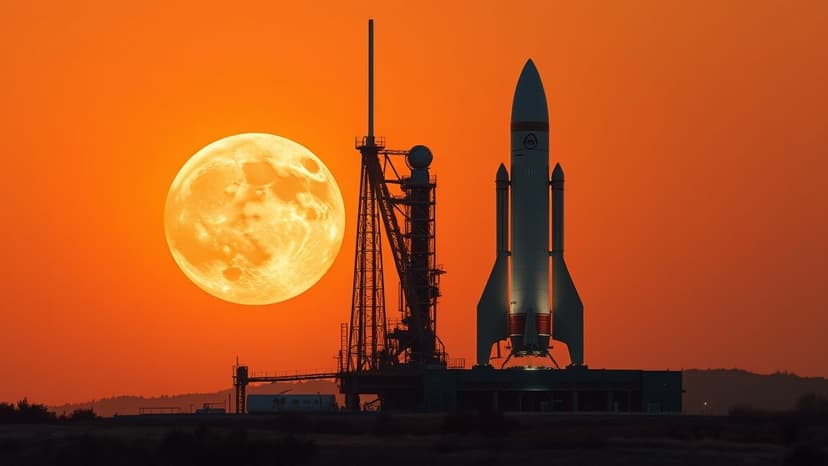
Artemis II: Humans Return to Lunar Orbit in 2026

NASA's Artemis program is nearing a significant milestone with the Artemis II mission, scheduled for a February 2026 launch. This crewed flight will send four astronauts, including representatives from NASA and the Canadian Space Agency, on a trajectory around the moon. The primary objective is to test and verify the Orion spacecraft's systems in deep space, a critical step following the uncrewed Artemis I test flight.

The mission represents the first time humans will venture beyond near-Earth orbit since the Apollo era concluded in 1972. While the astronauts will not land on the moon, their journey will provide valuable data on human physiological responses to the harsh deep-space environment. This scientific data is crucial for understanding how to support long-term human presence on the lunar surface and for future missions, potentially to Mars.

Artemis II's complex trajectory around the moon is designed to stress-test Orion's capabilities, including its ability to return the crew to Earth even if propulsion systems fail. The mission also faces challenges related to radiation exposure and potential communication blackouts. The insights gained from Artemis II will pave the way for subsequent missions aiming to establish a permanent lunar base and conduct lunar landings.

trending

Daycare workers sentenced for abuse

trending

Bills Broncos NFL Playoff Game

trending

Rockets face Sacramento Kings

trending

Astronauts return after health crisis

trending

USS Abraham Lincoln drills China

trending

Golden Globes 2026 awards

trending

Patriots await Steelers or Texans

trending

Sakkari faces Kasatkina Adelaide

trending

Amen Thompson scores 31 points

Disclaimer: This story has been auto-aggregated and auto-summarised by a computer program. This story has not been edited or created by the Feedzop team.
The Artemis II mission is scheduled to launch as soon as February 2026.
The Artemis II crew includes NASA astronauts Reid Wiseman, Victor Glover, and Christina Koch, alongside Canadian Space Agency astronaut Jeremy Hansen.
The main goal is to test and verify the Orion spacecraft's systems in deep space and return astronauts to lunar orbit for the first time since 1972.

Read more news on

Scienceside-arrow

You may also like

Artemis 2 Moon Mission Blastoff Nears!

1 day ago • 35 reads

article image

NASA Budget Saved: Congress Rejects Trump Cuts

5 Jan • 36 reads

article image

Firefly Aerospace Lands Moon Mission Deal

12 Dec, 2025 • 163 reads

article image

Canoo Vans Idle: NASA & USPS Halt Use of Bankrupt EV

9 Dec, 2025 • 157 reads

article image

Hubble's Latest Glimpse: Comet 3I/ATLAS Approaches Earth

8 Dec, 2025 • 191 reads

article image