

Home / Science / NASA Sees Moon's Hidden Grand Canyon
NASA Sees Moon's Hidden Grand Canyon
5 Apr
Summary
- Astronauts captured a rare image of the full Orientale basin.
- This massive impact basin is 200 miles wide and 3.7 billion years old.
- The Artemis II mission faced persistent issues with its spacecraft's toilet.
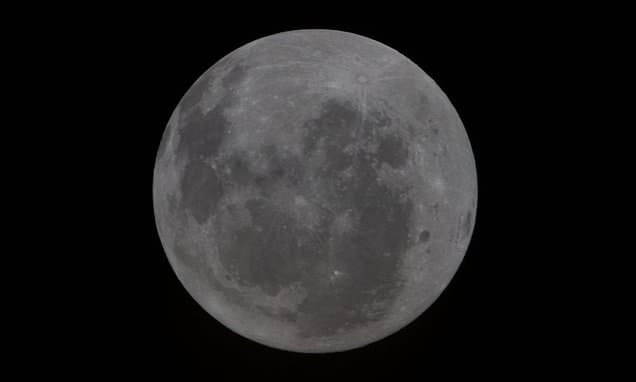
Astronauts on NASA's Artemis II mission have achieved a historic milestone by capturing the first human-recorded view of the Orientale basin, a colossal impact crater on the lunar surface. This immense geological feature, spanning 200 miles, was formed 3.7 billion years ago by a powerful asteroid impact. Previously, only satellites had imaged its entirety, with human observation being partial due to lower altitudes during past missions.
The journey, a 685,000-mile round trip, has largely proceeded smoothly. However, the crew has contended with persistent issues regarding their spacecraft's toilet. The waste management system experienced malfunctions shortly after launch, initially due to a 'warm-up' period and later a frozen vent, which necessitated Mission Control's intervention to orient the capsule towards the sun for thawing.
During the toilet malfunctions, astronauts relied on a bag-and-funnel system for certain functions. These issues were eventually resolved, allowing for full operational use of the upgraded toilet, designed with improved features for female astronauts and a private cabin, a significant advancement from the Apollo era facilities.
The Artemis II mission is paving the way for future lunar exploration, with a planned moon landing in 2028. This voyage marks the farthest humans have traveled from Earth since the Apollo missions, aiming to test critical systems and procedures for subsequent crewed landings.

