feedzop-word-mark-logo
searchLogin
Feedzop
homeFor YouUnited StatesUnited States
You
bookmarksYour BookmarkshashtagYour Topics
Trending
trending

Armed man at Temecula mall

trending

Reddit CDN server errors

trending

Stephenville Jackets state championship

trending

Luke Air Force Base shooting

trending

Venables leads Oklahoma to CFP

trending

50-year-old Silva knocks Woodley

trending

DeBoer says Alabama ready

trending

Caroline Dubois retains world title

trending

Giddey dominates Bulls victory

Terms of UsePrivacy PolicyAboutJobsPartner With Us

© 2025 Advergame Technologies Pvt. Ltd. ("ATPL"). Gamezop ® & Quizzop ® are registered trademarks of ATPL.

Gamezop is a plug-and-play gaming platform that any app or website can integrate to bring casual gaming for its users. Gamezop also operates Quizzop, a quizzing platform, that digital products can add as a trivia section.

Over 5,000 products from more than 70 countries have integrated Gamezop and Quizzop. These include Amazon, Samsung Internet, Snap, Tata Play, AccuWeather, Paytm, Gulf News, and Branch.

Games and trivia increase user engagement significantly within all kinds of apps and websites, besides opening a new stream of advertising revenue. Gamezop and Quizzop take 30 minutes to integrate and can be used for free: both by the products integrating them and end users

Increase ad revenue and engagement on your app / website with games, quizzes, astrology, and cricket content. Visit: business.gamezop.com

Property Code: 5571

Home / Science / Ants' Tiny Trade-Off: Thinner Shells, Bigger Colonies

Ants' Tiny Trade-Off: Thinner Shells, Bigger Colonies

20 Dec

•

Summary

  • Thinner ant exoskeletons correlate with larger colony sizes.
  • Ants may trade cuticle thickness for increased worker numbers.
  • Computer vision algorithms analyzed ant exoskeletons efficiently.
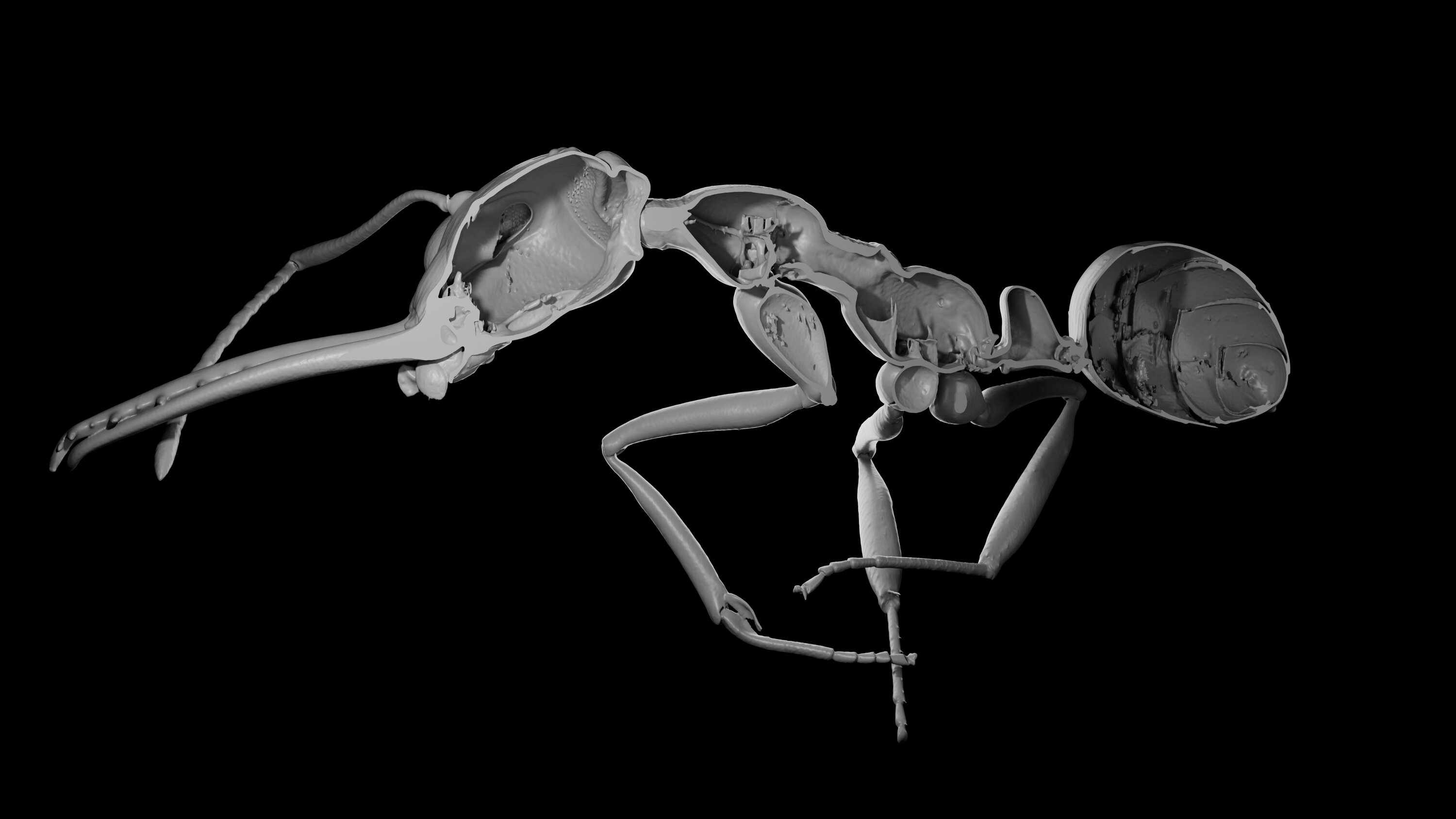
Ants' Tiny Trade-Off: Thinner Shells, Bigger Colonies

Ants have achieved global dominance by adopting a surprising evolutionary strategy: sacrificing individual robustness for sheer numbers. New research indicates a significant correlation between thinner exoskeletons and larger colony sizes across thousands of ant species. This suggests that over evolutionary time, certain ant populations have prioritized producing more workers, even if each worker is less protected.

The study, published in Science Advances, utilized advanced computer vision algorithms to analyze cuticle thickness from hundreds of ant species. This technological leap allowed researchers to process a vast dataset efficiently, uncovering patterns that were previously unfeasible to detect. The findings highlight a "quality versus quantity" trade-off, where reduced investment in each ant's protective cuticle enables a more expansive workforce.


This adaptation has profound implications for ants' ecological roles as soil aerators and seed dispersers. By optimizing for numbers, ant societies have become more complex and adaptable, allowing them to thrive in diverse global habitats and function as crucial ecological engineers.

Disclaimer: This story has been auto-aggregated and auto-summarised by a computer program. This story has not been edited or created by the Feedzop team.
Arthur Matte's study found a correlation between thinner ant exoskeletons and larger colony sizes, suggesting an evolutionary trade-off.
Thinner cuticles require less nitrogen to produce, allowing ants to invest more resources into creating a greater number of workers.
Researchers developed computer vision algorithms using CT scans of ants to efficiently measure cuticle thickness across many species.

Read more news on

Scienceside-arrow

You may also like

AI Model Cracks Bird Flu Human Spillover Code

22 hours ago • 18 reads

article image

AI's Brainpower Bottleneck Solved?

17 Dec • 1 read

article image

Psychiatry's Past Lies: Rosenhan's Experiment Exposed

17 Dec • 5 reads

article image

OpenAI-Backed Chai Reaches $1.3B Valuation for AI Drug Design

16 Dec • 11 reads

article image

Actress Shares IVF Journey After Miscarriage

9 Dec • 43 reads

article image