Home / Science / Ants' Tiny Trade-Off: Thinner Shells, Bigger Colonies
Ants' Tiny Trade-Off: Thinner Shells, Bigger Colonies
20 Dec, 2025
Summary
- Thinner ant exoskeletons correlate with larger colony sizes.
- Ants may trade cuticle thickness for increased worker numbers.
- Computer vision algorithms analyzed ant exoskeletons efficiently.
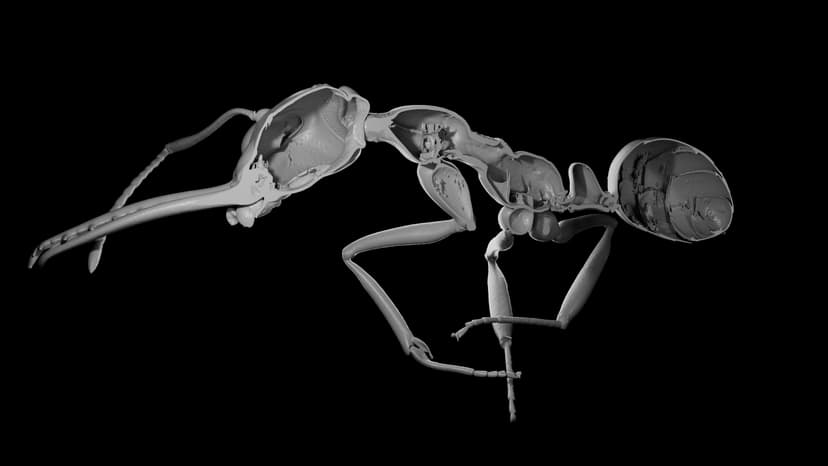
Ants have achieved global dominance by adopting a surprising evolutionary strategy: sacrificing individual robustness for sheer numbers. New research indicates a significant correlation between thinner exoskeletons and larger colony sizes across thousands of ant species. This suggests that over evolutionary time, certain ant populations have prioritized producing more workers, even if each worker is less protected.
The study, published in Science Advances, utilized advanced computer vision algorithms to analyze cuticle thickness from hundreds of ant species. This technological leap allowed researchers to process a vast dataset efficiently, uncovering patterns that were previously unfeasible to detect. The findings highlight a "quality versus quantity" trade-off, where reduced investment in each ant's protective cuticle enables a more expansive workforce.