
Home / Science / Space-Age Design Thrives in Antarctica's Extreme Cold
Space-Age Design Thrives in Antarctica's Extreme Cold
25 May
Summary
- Architect Hugh Broughton designs Antarctica's prevailing 'space-age' style.
- His stations feature rounded corners and vibrant colors for extreme conditions.
- Discovery Building is his largest project, a 48,000-square-foot research facility.
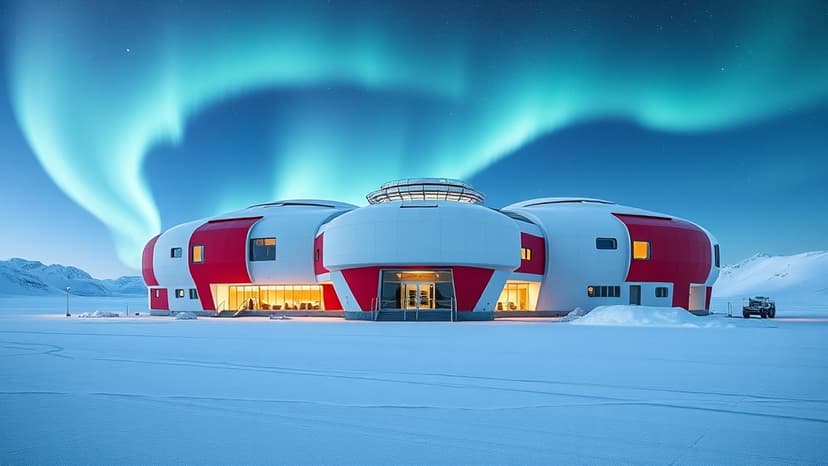
Hugh Broughton, a prolific architect, has significantly influenced Antarctica's architectural style with his "space-age" aesthetic. His firm has designed numerous research stations, incorporating rounded corners, vibrant colors, and pod-like forms that are both pragmatic and visually striking. Broughton's designs prioritize the well-being of occupants, focusing on maximizing natural light and creating comfortable interior spaces, even in extreme isolation. His largest project to date is the 48,000-square-foot Discovery Building at Rothera Research Station.
Broughton's expertise emerged from a competition to design the Halley VI British Antarctic Research Station, a modular facility on skis that can be relocated. This groundbreaking project showcased his ability to address the dynamic Antarctic environment, including ice shelf movement and snow accumulation. His work also extends to other extreme locations, demonstrating a unique capability in designing for challenging climates.
Modern Antarctic research stations are highly self-sufficient, but Broughton emphasizes that human experience is paramount. His designs consider psychological factors, using elements like natural light, specific colors, and even scents to improve occupant morale. The Discovery Building, opened in 2026, incorporates features like triple-glazed windows and aerogels, inspired by space travel to enhance energy efficiency and natural light.
Antarctic architecture faces unique constraints, including environmental impact studies and approvals from the Antarctic Treaty. Broughton's designs aim to be subtle yet functional, considering factors like animal welfare and prevailing winds. The increasing geopolitical significance of Antarctica, with nations viewing research stations as "embassies on the ice," suggests a growing demand for specialized architectural solutions like those Broughton provides.
