feedzop-word-mark-logo
searchLogin
Feedzop
homeFor YouUnited StatesUnited States
You
bookmarksYour BookmarkshashtagYour Topics
Trending
Terms of UsePrivacy PolicyAboutJobsPartner With Us

© 2026 Advergame Technologies Pvt. Ltd. ("ATPL"). Gamezop ® & Quizzop ® are registered trademarks of ATPL.

Gamezop is a plug-and-play gaming platform that any app or website can integrate to bring casual gaming for its users. Gamezop also operates Quizzop, a quizzing platform, that digital products can add as a trivia section.

Over 5,000 products from more than 70 countries have integrated Gamezop and Quizzop. These include Amazon, Samsung Internet, Snap, Tata Play, AccuWeather, Paytm, Gulf News, and Branch.

Games and trivia increase user engagement significantly within all kinds of apps and websites, besides opening a new stream of advertising revenue. Gamezop and Quizzop take 30 minutes to integrate and can be used for free: both by the products integrating them and end users

Increase ad revenue and engagement on your app / website with games, quizzes, astrology, and cricket content. Visit: business.gamezop.com

Property Code: 5571

Home / Science / Animals Sense Disasters: Myth or Reality?

Animals Sense Disasters: Myth or Reality?

22 Jan

•

Summary

  • Animals may sense subtle environmental changes before disasters.
  • Studies analyze animal behavior for potential disaster prediction.
  • Scientific proof of animal predictive powers remains elusive.

Animals Sense Disasters: Myth or Reality?

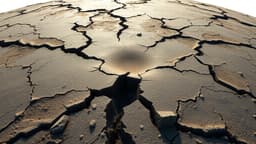
Historical accounts and folklore suggest animals possess an uncanny ability to predict natural disasters. From ancient Greece to modern times, numerous anecdotes describe animals exhibiting unusual behavior before earthquakes, tsunamis, and other catastrophic events. These reports are compelling, especially given the limited warning modern science can provide for events like earthquakes.

Despite widespread belief, scientific research struggles to confirm these predictive powers. Obtaining baseline data on normal animal behavior is difficult, and human biases can influence interpretations of past events. Some scientists theorize that animals might detect subtle environmental changes, such as atmospheric pressure shifts or vibrations, before a disaster strikes.

Studies, including one at the GFZ Helmholtz Centre for Geosciences, have analyzed unusual animal behavior before earthquakes, proposing they might react to foreshocks. Ongoing research, like that by the Max Planck Institute of Animal Behavior in Italy, uses transmitters to track animal activity during seismic events. While definitive proof of prediction capabilities is still lacking, these investigations provide valuable insights into how animals respond to environmental changes.

trending

Climate change human displacement

trending

Intel stock crashes after outlook

trending

Ryan Wedding: Drug Arrest

trending

Silver prices hit record highs

trending

Microsoft Stock Slumps Pre-Earnings

trending

NYC braces for major snow

trending

NFL player Kevin Johnson dead

trending

Savannah Guthrie vocal cord surgery

trending

Tesla ends Autopilot feature

Disclaimer: This story has been auto-aggregated and auto-summarised by a computer program. This story has not been edited or created by the Feedzop team.
While historical anecdotes suggest animals might predict earthquakes, scientific evidence is still limited. Researchers are investigating this phenomenon.
Studies, such as those at GFZ Helmholtz Centre and Max Planck Institute, analyze animal behavior before seismic events, but conclusive proof is lacking.
It's theorized animals might detect subtle environmental changes like air pressure, vibrations, or geomagnetic field variations before a disaster.

Read more news on

Scienceside-arrow

You may also like

Peru Quake: Magnitude 5.5 Rattles Northern Region

8 Jan • 57 reads

article image

Mexico Rocked by 6.3 Magnitude Quake

2 Jan • 85 reads

article image

Peru Coast Jolted by 5.8 Magnitude Quake

28 Dec, 2025 • 109 reads

article image

Air Pollution Causes Same-Sex Courtship in Flies

20 Dec, 2025 • 72 reads

article image

Nature Retracts Flawed Climate Economic Damage Paper

3 Dec, 2025 • 222 reads

article image