Home / Science / Ancient Ape Fossil Rewrites Evolutionary Map
Ancient Ape Fossil Rewrites Evolutionary Map
27 Mar
Summary
- A 17-18 million-year-old ape relative, Masripithecus, found in Egypt.
- Discovery suggests apes, including humans, may have originated in Afro-Arabia.
- This find expands the search area for early ape and human evolutionary history.

Paleontologists have unearthed the remains of Masripithecus, an ancient ape relative estimated to be 17 to 18 million years old, in northern Egypt. This discovery in the Qattara Depression region offers new insights into ape evolution, suggesting that the origins of modern apes, including humans, might lie in the Afro-Arabian region rather than solely in East Africa.
The finding challenges the long-held belief that ape and human evolutionary history is confined to specific areas like Ethiopia and Kenya. Masripithecus's existence indicates that early apes, possibly close to the lineage of all living hominoids, were more geographically widespread than previously understood. This encourages a re-evaluation of where and when the last common ancestor of humans and other great apes emerged.
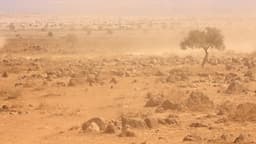
The specimen was found in the Wadi Moghra region, a fossil-rich area. Its dating places it after a period when Afro-Arabia connected with Eurasia, facilitating ape migration. This discovery underscores the need for continued exploration in regions where fossil records are currently sparse, such as parts of Africa, to piece together the complete puzzle of early primate evolution.