Home / Science / Ocean Currents Slowdown Fuels Extreme Weather Shifts
Ocean Currents Slowdown Fuels Extreme Weather Shifts
19 Jul
Summary
- AMOC slowdown will strengthen storms on North America's west coast.
- Atmospheric rivers may increase 50% globally by century's end.
- Ocean current changes impact polar ice melt and sea level rise.
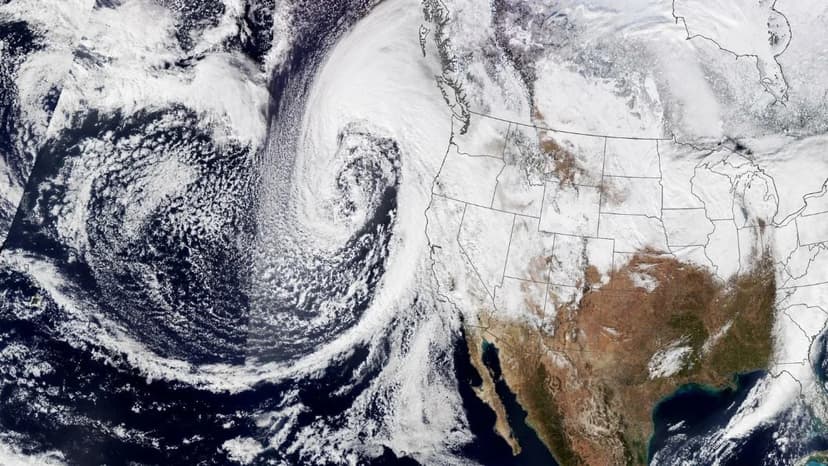
The Atlantic Meridional Overturning Circulation (AMOC), a major Atlantic Ocean current system, is weakening due to human-caused climate change. This slowdown is projected to have significant global climatic consequences. Scientists have determined that a weakening AMOC will strengthen storms along North America's west coast, particularly California, while reducing them over Greenland and the Arctic.
This oceanic change directly influences atmospheric rivers, long strips of concentrated water vapor. The frequency of atmospheric rivers globally may increase by approximately 50 percent by the end of the century. These intensified atmospheric rivers will contribute to greater rainfall in regions like South America's east coast and western Europe, with the most significant increases expected along North America's west coast.
Conversely, atmospheric rivers are predicted to become less frequent over the Arctic and Greenland. The impact extends to polar regions, where atmospheric rivers contribute substantially to ice melt in Antarctica, threatening ice shelf stability and accelerating global sea level rise. Understanding these far-reaching effects is crucial for preparing for future water resource and extreme weather changes.


