feedzop-word-mark-logo
searchLogin
Feedzop
homeFor YouUnited StatesUnited States
You
bookmarksYour BookmarkshashtagYour Topics
Trending
Terms of UsePrivacy PolicyAboutJobsPartner With Us

© 2026 Advergame Technologies Pvt. Ltd. ("ATPL"). Gamezop ® & Quizzop ® are registered trademarks of ATPL.

Gamezop is a plug-and-play gaming platform that any app or website can integrate to bring casual gaming for its users. Gamezop also operates Quizzop, a quizzing platform, that digital products can add as a trivia section.

Over 5,000 products from more than 70 countries have integrated Gamezop and Quizzop. These include Amazon, Samsung Internet, Snap, Tata Play, AccuWeather, Paytm, Gulf News, and Branch.

Games and trivia increase user engagement significantly within all kinds of apps and websites, besides opening a new stream of advertising revenue. Gamezop and Quizzop take 30 minutes to integrate and can be used for free: both by the products integrating them and end users

Increase ad revenue and engagement on your app / website with games, quizzes, astrology, and cricket content. Visit: business.gamezop.com

Property Code: 5571

Home / Science / Life's Recipe: Forget Water, Seek Phosphorus!

Life's Recipe: Forget Water, Seek Phosphorus!

9 Feb

•

Summary

  • New research suggests phosphorus and nitrogen are key for life.
  • Water-rich planets may not harbor life without these elements.
  • Earth's chemical balance makes it uniquely suited for life.
Life's Recipe: Forget Water, Seek Phosphorus!

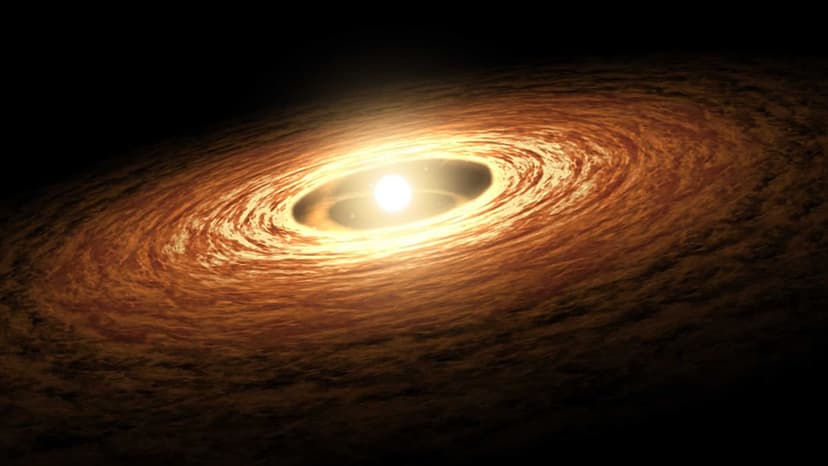
The ongoing quest for life beyond Earth is being re-evaluated, with new research suggesting that previous assumptions about water's primacy may be misguided. A team of experts is now advocating for astronomers to prioritize searching for planets rich in phosphorus and nitrogen, rather than solely focusing on water-abundant worlds.

These two elements, phosphorus and nitrogen, are posited as indispensable for life's formation. Phosphorus is vital for creating DNA and RNA, while nitrogen is a core component of proteins. Without these, life as we understand it cannot emerge, irrespective of the presence of water. The availability of these elements is determined by a planet's 'chemical Goldilocks zone,' a narrow band influenced by oxygen levels during formation.

Researchers utilized numerical modeling to determine that a specific oxygen balance during a planet's cooling is essential. Too much or too little oxygen can trap phosphorus or nitrogen away from the surface mantle, rendering the planet uninhabitable. Earth, by fortunate chance, exists within this critical zone, but this may indicate that habitable planets are far rarer than previously estimated.

This discovery has significant implications for future space exploration and the search for alien life. The findings suggest that an abundance of oxygen, often seen as a sign of habitability, could actually indicate a lack of essential nutrients for life. For instance, Mars is believed to be outside this chemical Goldilocks zone, possessing sufficient phosphorus but insufficient nitrogen at its surface, and challenging soil conditions.

Future searches for extraterrestrial life should therefore scrutinize the chemical composition of exoplanets more closely. This can be indirectly assessed by examining the type of star a planet orbits, as planets and their host stars share similar formative materials. Solar systems with stars similar to our Sun are considered more promising locations in the universe for finding potentially habitable worlds.

Disclaimer: This story has been auto-aggregated and auto-summarised by a computer program. This story has not been edited or created by the Feedzop team.
Phosphorus is essential for creating DNA and RNA, which store and transmit genetic information, while nitrogen is a fundamental component of proteins, the building blocks of cells.
The chemical Goldilocks zone refers to a planetary condition where there is a specific balance of oxygen that allows both phosphorus and nitrogen to be abundant in the rocky mantle, crucial for life's formation.
Yes, according to new research, planets with abundant water may still be barren if they lack the necessary balance of phosphorus and nitrogen due to their formation conditions.

Read more news on

Scienceside-arrow
trending

Ukraine power outages February 10

trending

Julia Taubitz leads Olympic luge

trending

Curry out against Grizzlies

trending

MBZUAI celebrates fifth anniversary

trending

Jutta Leerdam wins Olympic gold

trending

Netherlands vs Namibia T20

trending

Kim Kardashian, Lewis Hamilton couple?

trending

Lakers vs Thunder injury report

trending

South Africa beats Canada

You may also like

Hidden Danger: Phosphorus Overload in Farmland

26 Jan • 47 reads

Kolkata's Air: Toxic Gases Now Trump PM Pollution

19 Jan • 124 reads

article image

NASA Seeks Mars Farmers: $750K Prize for Red Planet Food Plan

13 Jan • 133 reads

article image

Australia's Forests Dying Faster as Climate Warms

6 Jan • 219 reads

article image

Europa's Ocean: Radioactive Rocks Could Fuel Alien Life

30 Dec, 2025 • 52 reads

article image