Home / Science / AI Navigates Mars: Rover's First Autonomous Drive
AI Navigates Mars: Rover's First Autonomous Drive
2 Feb
Summary
- AI planned and executed the first autonomous drives on Mars.
- Generative AI analyzed images and terrain data for safe navigation.
- This technology promises more efficient future space exploration.
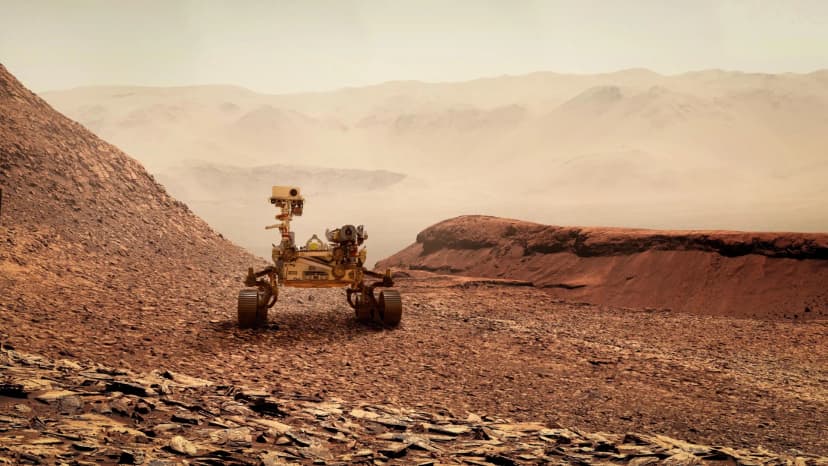
NASA's Perseverance rover has achieved a historic milestone, completing its first drives on Mars autonomously planned by artificial intelligence. These pioneering excursions, which occurred on December 8 and 10, were orchestrated by the Jet Propulsion Laboratory in Southern California.
The AI system employed generative AI, specifically vision-language models, to scrutinize orbital images and terrain data. This allowed the AI to identify potential hazards and plot safe routes, a complex task traditionally handled by human experts on Earth due to communication delays. The AI successfully identified key surface features like bedrock and boulder fields.
Before execution, the AI-generated commands were rigorously tested on a digital twin of the rover, verifying over 500,000 telemetry variables. On December 8, Perseverance covered 689 feet (210 meters), followed by an 807-foot (246-meter) drive two days later. This demonstration signifies a leap in autonomous navigation capabilities, paving the way for more efficient and scientifically productive deep-space missions.