feedzop-word-mark-logo
searchLogin
Feedzop
homeFor YouUnited StatesUnited States
You
bookmarksYour BookmarkshashtagYour Topics
Trending
trending

Earthquake swarm rattles San Ramon

trending

DR Congo faces Benin

trending

49ers activate Yetur Gross-Matos

trending

Curry leads Warriors past Magic

trending

George Kittle ankle injury

trending

Cade Cunningham jersey retired

trending

Kraken beat Anaheim Ducks

trending

McConaughey returns to late-night TV

trending

Pat Spencer All-Value Team

Terms of UsePrivacy PolicyAboutJobsPartner With Us

© 2025 Advergame Technologies Pvt. Ltd. ("ATPL"). Gamezop ® & Quizzop ® are registered trademarks of ATPL.

Gamezop is a plug-and-play gaming platform that any app or website can integrate to bring casual gaming for its users. Gamezop also operates Quizzop, a quizzing platform, that digital products can add as a trivia section.

Over 5,000 products from more than 70 countries have integrated Gamezop and Quizzop. These include Amazon, Samsung Internet, Snap, Tata Play, AccuWeather, Paytm, Gulf News, and Branch.

Games and trivia increase user engagement significantly within all kinds of apps and websites, besides opening a new stream of advertising revenue. Gamezop and Quizzop take 30 minutes to integrate and can be used for free: both by the products integrating them and end users

Increase ad revenue and engagement on your app / website with games, quizzes, astrology, and cricket content. Visit: business.gamezop.com

Property Code: 5571

You may also like

Space Samples Launch: New Era for Research

20 hours ago • 4 reads

article image

Rare Earths Leap: Critica Secures Vital Magnet Metals

2 Dec • 108 reads

article image

Sun-Blocking Cloud: Climate Fix or Catastrophe?

24 Nov • 155 reads

article image

Powerful "Cannibal Storm" Threatens Earth's Tech, Auroras Possible

13 Nov • 181 reads

article image

Pleiades Star Cluster Harbors Over 3,000 'Lost Sisters', Astronomers Reveal

12 Nov • 174 reads

article image

Home / Science / AI Decodes 3.3 Billion-Year-Old Molecular 'Ghosts' to Reveal Earliest Signs of Life

AI Decodes 3.3 Billion-Year-Old Molecular 'Ghosts' to Reveal Earliest Signs of Life

18 Nov

Summary

  • Earliest chemical evidence of life on Earth pushed back 1.6 billion years
  • AI used to detect subtle molecular signatures left by ancient organisms
  • Discovery could guide search for life on other planets like Mars and Europa
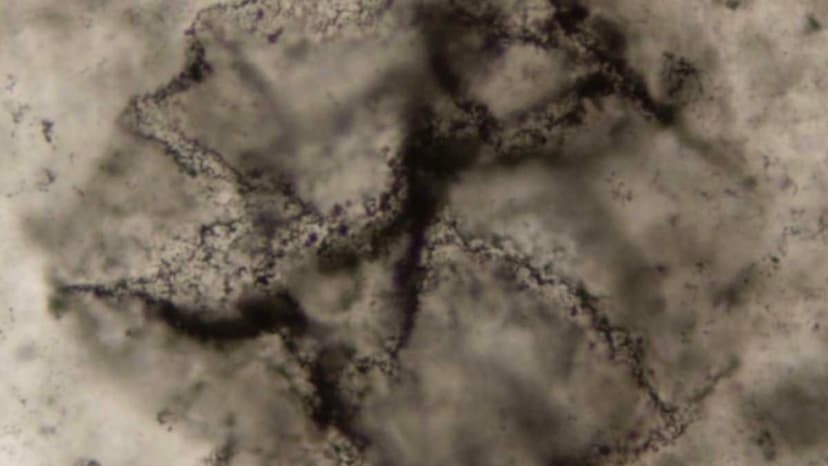
AI Decodes 3.3 Billion-Year-Old Molecular 'Ghosts' to Reveal Earliest Signs of Life

In a groundbreaking discovery, scientists have uncovered the earliest chemical evidence of life on Earth, dating back over 3.3 billion years. The research team, led by experts at the Carnegie Institution for Science, used advanced AI to detect subtle molecular 'fingerprints' left behind by long-extinct organisms.

These findings push back the timeline of life's origins on Earth by a staggering 1.6 billion years, offering unprecedented insight into the earliest known lifeforms. The method also detected evidence of photosynthesis, a key milestone that allowed complex life to evolve, 800 million years earlier than previously documented.

The researchers believe this innovative approach, which can decipher degraded chemical data, could revolutionize the search for life on other planets. Even if fossils are never found, the same techniques may be able to detect biotic signatures on Martian rocks or samples from Jupiter's moon Europa. As one of the study's co-authors noted, "It opens the door to exploring ancient and alien environments with a fresh lens, guided by patterns we might not even know to look for ourselves."

Disclaimer: This story has been auto-aggregated and auto-summarised by a computer program. This story has not been edited or created by the Feedzop team.
The researchers discovered the earliest chemical evidence of life on Earth, dating back over 3.3 billion years, using advanced AI to detect subtle molecular 'fingerprints' left behind by long-extinct organisms.
The discovery of evidence of photosynthesis in 2.52-billion-year-old rocks, 800 million years earlier than previously documented, helped explain how Earth's atmosphere became oxygen-rich, a key milestone that allowed complex life, including humans, to evolve.
The researchers believe their innovative approach, which can decipher degraded chemical data, could revolutionize the search for life on other planets like Mars and Jupiter's moon Europa, as it may be able to detect biotic signatures even if fossils are never found.

Read more news on

Scienceside-arrowMars (Planet)side-arrowEarthside-arrow
•