feedzop-word-mark-logo
searchLogin
Feedzop
homeFor YouUnited StatesUnited States
You
bookmarksYour BookmarkshashtagYour Topics
Trending
Terms of UsePrivacy PolicyAboutJobsPartner With Us

© 2026 Advergame Technologies Pvt. Ltd. ("ATPL"). Gamezop ® & Quizzop ® are registered trademarks of ATPL.

Gamezop is a plug-and-play gaming platform that any app or website can integrate to bring casual gaming for its users. Gamezop also operates Quizzop, a quizzing platform, that digital products can add as a trivia section.

Over 5,000 products from more than 70 countries have integrated Gamezop and Quizzop. These include Amazon, Samsung Internet, Snap, Tata Play, AccuWeather, Paytm, Gulf News, and Branch.

Games and trivia increase user engagement significantly within all kinds of apps and websites, besides opening a new stream of advertising revenue. Gamezop and Quizzop take 30 minutes to integrate and can be used for free: both by the products integrating them and end users

Increase ad revenue and engagement on your app / website with games, quizzes, astrology, and cricket content. Visit: business.gamezop.com

Property Code: 5571

Home / Science / Teen Brain Builds New Synapses, Not Just Pruning

Teen Brain Builds New Synapses, Not Just Pruning

19 Jan

•

Summary

  • Adolescent brains actively build new synapse clusters.
  • This new growth may shape higher-level thinking.
  • Disrupted synapse building linked to schizophrenia.

Teen Brain Builds New Synapses, Not Just Pruning

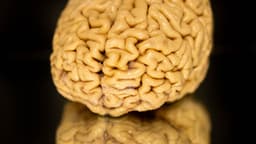
Recent scientific findings indicate that the adolescent brain undergoes significant development beyond merely eliminating neural connections. Researchers have identified that during the teenage years, the brain actively forms dense new clusters of synapses within specific neuronal regions. This discovery suggests that adolescence is a critical period for constructing neural pathways that underpin higher-level cognitive abilities, such as reasoning and decision-making.

The study, published in Science Advances, utilized advanced microscopy and tissue clearing techniques to map synaptic structures in mouse brains. The findings revealed concentrated hotspots of synapse formation, particularly in Layer 5 neurons of the cerebral cortex, which did not exist in younger animals. This challenges the prevailing hypothesis that adolescent brain development is solely characterized by synaptic pruning, proposing instead a dual process of both pruning and formation.

This new understanding of adolescent brain development may offer insights into neuropsychiatric disorders. Specifically, disruptions in the formation of these new synaptic clusters during adolescence are being investigated as a potential contributing factor to schizophrenia. By examining mice with genetic mutations linked to schizophrenia, scientists observed impaired synapse formation, suggesting that issues with building new connections, rather than just losing old ones, could be key to understanding such conditions.

Disclaimer: This story has been auto-aggregated and auto-summarised by a computer program. This story has not been edited or created by the Feedzop team.
Kyushu University scientists discovered that adolescent brains actively build new, dense clusters of synapses, not just prune old connections.
Disruptions in the formation of new synaptic clusters during adolescence may play a role in the development of schizophrenia.
The new theory suggests that adolescent brains both prune existing synapses and actively form new ones, particularly in specific brain regions.

Read more news on

Scienceside-arrow
trending

Earthquake hits Southern California

trending

Bill Self hospitalized in Kansas

trending

Blackhawks beat Jets, 2-0

trending

Aurora borealis visible tonight

trending

Nick Saban docuseries announced

trending

Pacers, 76ers face injuries

trending

Michigan 100-vehicle pileup closes I-196

trending

Penguins beat Kraken 6-3

trending

Thunder crush Cavaliers 136-104

You may also like

Poverty's Toll: Infant Brain Development Delayed

9 Jan • 35 reads

Dance Your Way to a Sharper Mind

6 Jan • 81 reads

article image

Genes Link Minds: Shared Roots for Mental Health

4 Jan • 123 reads

article image

Guilt vs. Shame: Brain Maps Reveal Different Triggers

19 Dec, 2025 • 75 reads

article image

Psychiatry's Past Lies: Rosenhan's Experiment Exposed

17 Dec, 2025 • 111 reads

article image