Home / Science / Physicist's 1960 Doomsday Prediction: What Really Happened?
Physicist's 1960 Doomsday Prediction: What Really Happened?
13 Nov
Summary
- A 1960 prediction set a doomsday date of November 13, 2026.
- The prediction was based on a mathematical model of population growth.
- Current concerns focus on declining birth rates, not overpopulation.
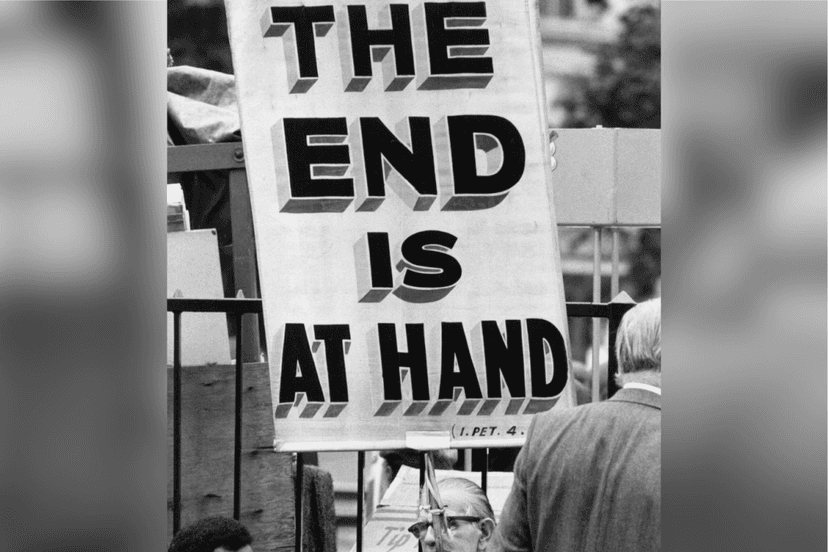
A physicist's 1960 paper famously predicted doomsday on November 13, 2026, projecting that human population would approach infinity. Austrian American physicist Heinz von Foerster and colleagues used a mathematical model fitted to nearly two millennia of data, but the specific date was a deliberate jest. The precise date was chosen as it was von Foerster's birthday, and the model's error margin allowed for a five-and-a-half-year deviation.
The paper emerged during a period of growing concern over rapid population growth, driven by falling death rates and high birth rates. Fears of resource scarcity were widespread, amplified by publications like 'The Population Bomb.' At that time, the global population was about 3 billion.
Sixty-six years later, the world's population has surpassed 8 billion. However, the narrative has shifted dramatically. Many nations now grapple with the opposite issue: declining birth rates, aging populations, and shrinking workforces. This reversal highlights how demographic concerns have evolved significantly since the 1960s.
While the 'doomsday equation' provided accurate population projections for several decades, its accuracy began to falter around 1993. Today, the approaching date serves as a reminder of past predictions and the complex, evolving nature of global population dynamics and societal concerns.


