Home / Lifestyle / Standing Strong: 350-Year-Old Navratri Vow Defies Gravity
Standing Strong: 350-Year-Old Navratri Vow Defies Gravity
17 Oct
Summary
- Men stand for nine days at Kalbhairavnath temple, a 350-year-old tradition.
- Participants must not sit or sleep on the ground, using hammocks to rest.
- The ritual fosters communal harmony, with Hindus and Muslims participating.
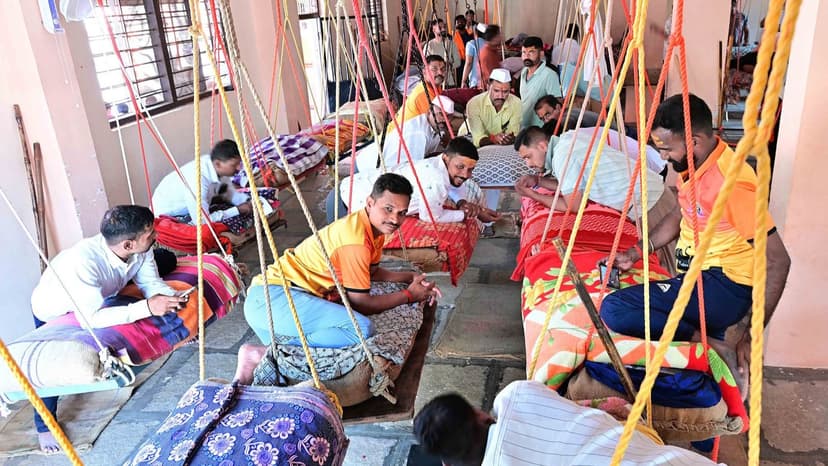
Pande village in Satara's Wai taluka observes a unique 350-year-old tradition called Ubhyachi Navratra, or Standing Navratri, at the Kalbhairavnath temple. During this nine-day observance, approximately 100 men take a vow, known as 'navas,' either to fulfill a wish or express gratitude to the village deity. Participants, called Navratkaris, aged 18 to 65, follow demanding rules, including remaining standing and never sleeping on the ground. They rest by leaning on specially hung hammocks, ensuring one foot remains in contact with the earth. Former sarpanch Madhukar Jadhav notes that devotees wear white during aarti, are barefoot, and carry a wooden stick for balance. They also observe a strict fast, abstaining from oil, salt, and chili, subsisting on milk, fruit, and sago kheer. This tradition is notable for its communal harmony, with both Hindus and Muslims participating. Harun Inamdar, a Muslim villager, has been a participant for 26 years, highlighting the absence of religious discrimination. Historically, if a woman in a Navratkari's family menstruated during the nine days, she would move to a separate room or stay with relatives outside the village, a practice intended to ease the burden on her. The ritual involves a daily routine that includes morning and evening aartis, meditation, and fellowship among participants. Devotees often take leave from work, including those in the armed forces, to join the observance, demonstrating its significance.


