feedzop-word-mark-logo
searchLogin
Feedzop
homeFor YouUnited StatesUnited States
You
bookmarksYour BookmarkshashtagYour Topics
Trending
Terms of UsePrivacy PolicyAboutJobsPartner With Us

© 2026 Advergame Technologies Pvt. Ltd. ("ATPL"). Gamezop ® & Quizzop ® are registered trademarks of ATPL.

Gamezop is a plug-and-play gaming platform that any app or website can integrate to bring casual gaming for its users. Gamezop also operates Quizzop, a quizzing platform, that digital products can add as a trivia section.

Over 5,000 products from more than 70 countries have integrated Gamezop and Quizzop. These include Amazon, Samsung Internet, Snap, Tata Play, AccuWeather, Paytm, Gulf News, and Branch.

Games and trivia increase user engagement significantly within all kinds of apps and websites, besides opening a new stream of advertising revenue. Gamezop and Quizzop take 30 minutes to integrate and can be used for free: both by the products integrating them and end users

Increase ad revenue and engagement on your app / website with games, quizzes, astrology, and cricket content. Visit: business.gamezop.com

Property Code: 5571

Home / Health / Takeaway Salt Shock: Double Daily Limit Found!

Takeaway Salt Shock: Double Daily Limit Found!

22 Jan

•

Summary

  • Nearly 50% of takeaway meals exceed advertised salt levels.
  • Some dishes contain nearly double the NHS daily salt recommendation.
  • Pasta dishes average over 7g of salt per serving.
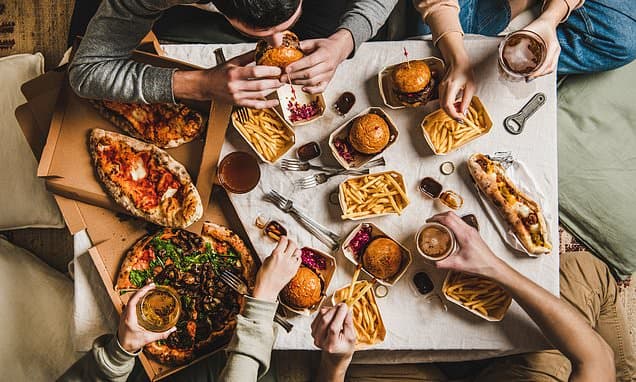
Takeaway Salt Shock: Double Daily Limit Found!

Recent research indicates that almost half of takeaway meals contain more salt than officially declared on their menus. A University of Reading study examined 39 meals from 23 outlets, finding that approximately 47% exceeded their stated salt levels. Dishes like curries, pasta, and pizzas frequently failed to match menu claims.

Specific findings highlighted that meat pizzas had the highest salt concentration per 100g. However, pasta dishes contained the most salt per serving, averaging 7.2g, with one dish containing as much as 11.2g – surpassing the NHS's recommended daily intake of 6mg for adults. Curry dishes exhibited wide salt variation, ranging from 2.3g to 9.4g per dish.

Lead author Professor Gunter Kuhnle noted the difficulty for restaurants in providing accurate salt values due to variations in preparation, ingredients, and portion sizes, suggesting menu labels are often "guess work." While the study had limitations, including a small sample size, it underscores a potential public health issue, as excess sodium intake is a primary cause of high blood pressure and cardiovascular problems. Experts suggest that reducing salt intake could prevent numerous heart disease cases by 2030.


trending

Ohio snow emergency declared

trending

TikTok down in United States

trending

Andreeva matches Venus Williams' feat

trending

Warrington Hospital baby death

trending

Alexander Zverev advances in Australia

trending

Oilers host Capitals

trending

London celebrates Chinese New Year

trending

Liza Minnelli defends AI use

Disclaimer: This story has been auto-aggregated and auto-summarised by a computer program. This story has not been edited or created by the Feedzop team.
The University of Reading study found that nearly 50% of takeaway meals contained more salt than advertised, with some exceeding daily recommendations.
Pasta dishes averaged over 7g of salt per serving, and meat pizzas had the highest salt concentration per 100g in the study.
Variations in preparation, ingredients, and portion sizes make it difficult for restaurants to provide exact salt content, leading to inaccurate menu labels.

Read more news on

Healthside-arrow

You may also like

UK Faces Six Dire Climate Futures

18 Dec, 2025 • 59 reads

article image

TikTok Star Tucker Genal Dies at 31

16 Dec, 2025 • 179 reads

article image

KU Student Death: Tech Leads to Suspect in 3 Days

12 Dec, 2025 • 200 reads

article image

Rutgers AD's Wife Files for Divorce Amid Scandal

6 Dec, 2025 • 281 reads

article image

Stein's Dream Job: Kentucky Head Coach

4 Dec, 2025 • 275 reads

article image