Home / Health / Red Tattoo Ink Triggers Rare Autoimmune Attack
Red Tattoo Ink Triggers Rare Autoimmune Attack
17 Nov
Summary
- A Polish man developed multiple autoimmune diseases after a red ink tattoo.
- Symptoms included widespread inflammation, hair loss, and lack of sweating.
- Surgical removal of tattooed skin and medication helped halt the illness.
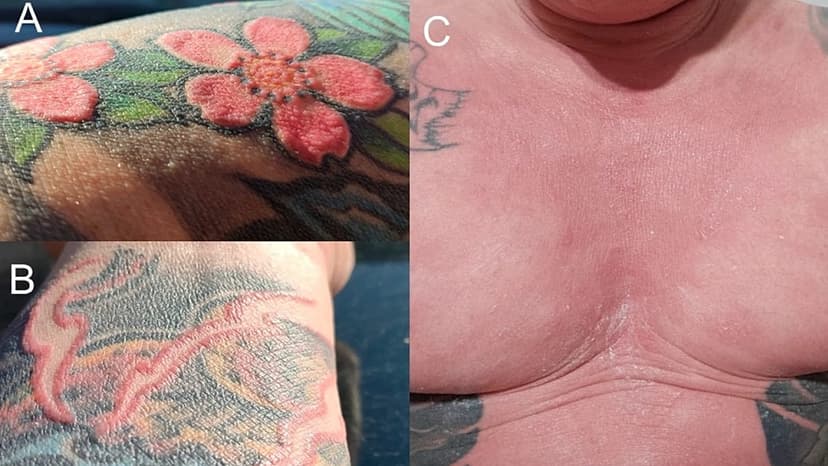
A severe case involving a 36-year-old Polish man has shed light on rare complications arising from red tattoo ink. In the summer of 2020, he received a tattoo on his forearm, and within four months, began experiencing itchy lesions that progressed to erythroderma, a severe inflammatory skin condition. Over subsequent years, his health deteriorated further, leading to hair loss, acquired depigmentation (vitiligo), and a complete inability to sweat.
Despite extensive treatment, the man's symptoms persisted until he underwent multiple surgical procedures to remove the tattooed skin. This, combined with medication, helped his hair regrow and halted the progression of vitiligo, although his anhidrosis remained. The man also suffered from Hashimoto thyroiditis and had a significantly reduced tolerance for physical exertion, impacting his ability to work.
Researchers emphasize that while adverse reactions to tattoo pigments are becoming more recognized, systemic and severe complications like this remain uncommon. They call for greater awareness, caution, and potentially stricter regulations for tattoo artists and ink composition, noting that while the EU introduced rules in 2022, many countries still lack such oversight.


