Home / Health / Parkinson's Breakthrough: Adaptive DBS offers New Hope
Parkinson's Breakthrough: Adaptive DBS offers New Hope
2 Mar
Summary
- Adaptive DBS device acts as a real-time pacemaker for the brain.
- The new technology adjusts stimulation based on brain signals.
- A patient reports the device significantly improved cognitive function.
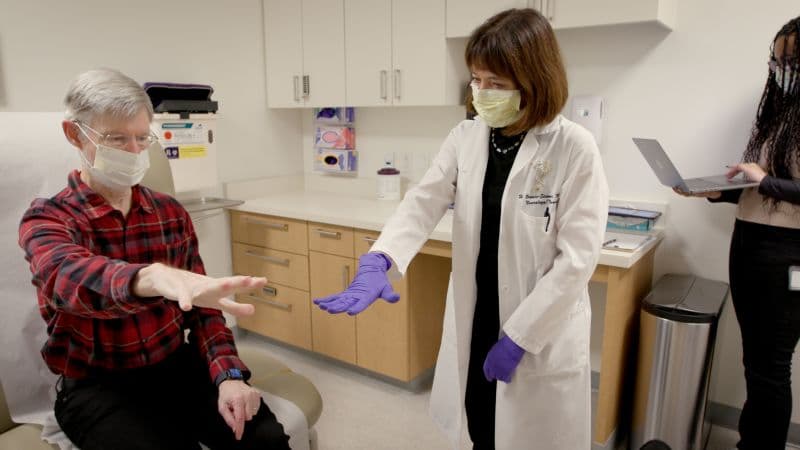
A new adaptive deep brain stimulation (aDBS) device, recently approved by the FDA in February 2025, is revolutionizing Parkinson's disease treatment. Unlike previous methods, this device monitors brain activity in real-time, delivering tailored electrical pulses as needed. This adaptive approach offers a significant advancement over older, constant stimulation methods.
Keith Krehbiel, diagnosed with Parkinson's in 1997, became the first patient to trial the aDBS device. Since receiving the implant in the summer of 2020, his tremors have nearly vanished, and he experiences less cognitive fog and nausea due to reduced medication. He notes that while not a cure, the device has made his life considerably better.
Dr. Helen Bronte-Stewart, the lead investigator, described the FDA approval as a validation of her decades of research. She emphasized that this breakthrough is just the beginning, with immense potential for future advancements in treating movement disorders. The device, named BrainSense aDBS, was recognized by Time magazine as one of the 'Best Inventions of 2025'.