Home / Health / Brain Implants Restore Hearing in Children
Brain Implants Restore Hearing in Children
22 Jan
Summary
- MERF completed 100 paediatric auditory brainstem implants since 2009.
- ABIs bypass the ear to send signals directly to the brainstem.
- New HSP technique preserves residual hearing for better outcomes.
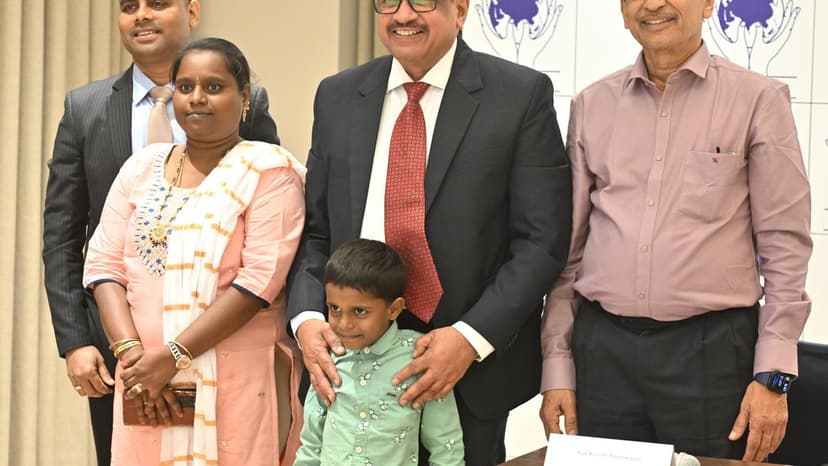
The Madras ENT Research Foundation (MERF) has successfully performed 100 paediatric auditory brainstem implants (ABIs) since 2009, offering a new path for children with severe hearing loss. The first pediatric ABI at MERF occurred in 2009.
These implants are crucial for the rare cases, about 4-5%, where children lack a developed cochlea or auditory nerve, rendering cochlear implants ineffective. ABI technology involves surgically placing an internal electrode on the brainstem's cochlear nucleus.
This internal device receives signals from an external processor, effectively bypassing the non-functional parts of the ear and auditory nerve. The complex surgery requires a multidisciplinary team of ENT surgeons, neurosurgeons, and audiologists, with procedures typically performed on children 18 months and older.
MERF is also pioneering Hearing and Structure Preservation (HSP) for individuals with partial deafness or auditory neuropathy spectrum disorder. This technique aims to preserve residual hearing alongside electrical stimulation, enabling better appreciation of music and improved hearing in challenging environments.
This innovative approach allows for electro-acoustic stimulation hearing, combining natural and artificial sound input. MERF has even performed bilateral simultaneous HSP, demonstrating advanced, individualized medical care tailored to the patient's specific cochlear dimensions.