Home / Health / Ont. Psychotherapist Urges OHIP Mental Health Coverage
Ont. Psychotherapist Urges OHIP Mental Health Coverage
17 Oct
Summary
- Psychotherapist petitions for expanded OHIP coverage for mental health.
- Many Ontarians struggle to afford necessary psychotherapy services.
- Government highlights existing programs but long wait times persist.
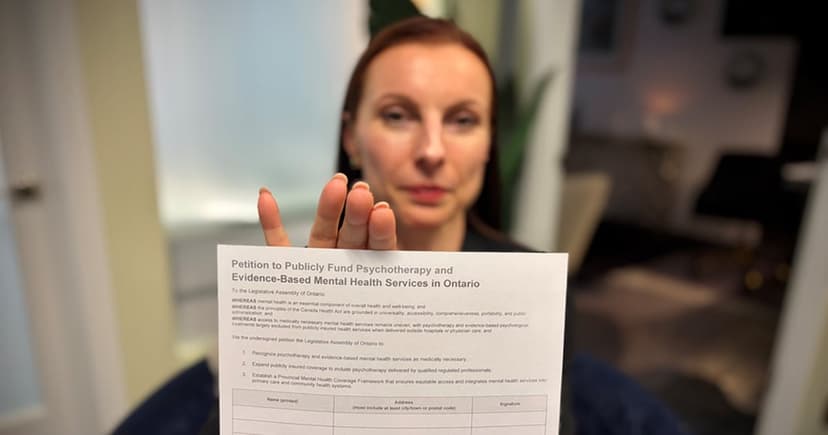
A psychotherapist in Guelph, Ontario, is advocating for increased provincial funding for mental health care, urging the Ontario government to extend public health insurance coverage. Marinela Trickett has initiated a petition to include psychotherapy services under the Ontario Health Insurance Plan (OHIP), highlighting the financial barriers many face in accessing essential mental health support.
Many individuals, such as 57-year-old Kari Parkhouse, report significant struggles in obtaining consistent care due to high costs. Parkhouse, who has dealt with anxiety and depression for decades, noted that her self-employment status leaves her without traditional benefits, impacting her ability to afford therapy crucial for her well-being.
Trickett explains that OHIP currently offers limited coverage, primarily for services provided by medical doctors, a fraction of whom practice psychotherapy. Her clinic offers reduced-cost sessions with student psychotherapists, but this option cannot meet the widespread demand for ongoing treatment.
Green Party MPP Mike Schreiner plans to present the petition, emphasizing that mental healthcare should not be a luxury. The College of Registered Psychotherapists of Ontario also supports leveraging its qualified members to improve access to care, provided government funding and regulatory changes are addressed.
The office of Ontario's Minister of Health asserts that the province is investing in community-based mental health services, including the free Ontario Structured Psychotherapy Program and a $3.8 billion investment over 10 years for a comprehensive mental health and addictions system. This includes support for Youth Wellness Hubs and expanded crisis response teams.
Despite these initiatives, access remains problematic, with some applicants facing wait times of six to eight weeks for initial contact through the Ontario Structured Psychotherapy Program. Trickett notes that waitlists at some centers can extend over two years, leaving many in prolonged distress without adequate support.


