feedzop-word-mark-logo
searchLogin
Feedzop
homeFor YouUnited StatesUnited States
You
bookmarksYour BookmarkshashtagYour Topics
Trending
Terms of UsePrivacy PolicyAboutJobsPartner With Us

© 2026 Advergame Technologies Pvt. Ltd. ("ATPL"). Gamezop ® & Quizzop ® are registered trademarks of ATPL.

Gamezop is a plug-and-play gaming platform that any app or website can integrate to bring casual gaming for its users. Gamezop also operates Quizzop, a quizzing platform, that digital products can add as a trivia section.

Over 5,000 products from more than 70 countries have integrated Gamezop and Quizzop. These include Amazon, Samsung Internet, Snap, Tata Play, AccuWeather, Paytm, Gulf News, and Branch.

Games and trivia increase user engagement significantly within all kinds of apps and websites, besides opening a new stream of advertising revenue. Gamezop and Quizzop take 30 minutes to integrate and can be used for free: both by the products integrating them and end users

Increase ad revenue and engagement on your app / website with games, quizzes, astrology, and cricket content. Visit: business.gamezop.com

Property Code: 5571

Home / Health / Plague's Human Toll Unearthed in Ancient Mass Grave

Plague's Human Toll Unearthed in Ancient Mass Grave

31 Jan

•

Summary

  • Ancient mass grave in Jordan offers new details on Justinian's Plague.
  • DNA analysis confirms Yersinia pestis as the plague's cause.
  • Victims' diverse demographics reveal societal impact and mobility.

Plague's Human Toll Unearthed in Ancient Mass Grave

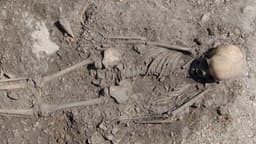
Archaeological research in Jerash, Jordan, has verified the first Mediterranean mass grave from the Justinian Plague, a pandemic that ravaged the Byzantine empire from AD 541 to AD 750. This discovery, detailed in the Journal of Archaeological Science, offers unprecedented empirical evidence of the plague's impact on human mobility, urban life, and societal vulnerability.

DNA extracted from victims' teeth at the Jerash burial site, identified as a single mortuary event, confirms Yersinia pestis as the plague's microbial agent. The research, involving experts from the University of South Florida and Florida Atlantic University, reveals a diverse mix of men, women, and ages, indicating a largely mobile population trapped by the crisis. This demographic diversity parallels modern pandemic experiences, such as travel restrictions during COVID-19.

trending

Ohio snow emergency declared

trending

TikTok down in United States

trending

Andreeva matches Venus Williams' feat

trending

Warrington Hospital baby death

trending

Alexander Zverev advances in Australia

trending

Oilers host Capitals

trending

London celebrates Chinese New Year

trending

Liza Minnelli defends AI use

Excavations at Jerash's hippodrome uncovered over 200 individuals, a transient population consistent with a regional trade hub. Researchers emphasize that pandemics are not merely biological events but social crises that deeply affect individuals within their context. The findings challenge historical skepticism about the plague's severity by providing tangible evidence of its devastating human toll.


Disclaimer: This story has been auto-aggregated and auto-summarised by a computer program. This story has not been edited or created by the Feedzop team.
A mass grave in Jerash, Jordan, has provided new details about the plague's impact on human mobility, urban life, and societal vulnerability.
DNA analysis from victims in the Jerash mass grave confirms that Yersinia pestis was the causative microbe of the Justinian Plague.
The diverse demographics of the victims suggest a largely mobile population was affected, drawing parallels to modern pandemic experiences like travel restrictions.

Read more news on

Healthside-arrow

You may also like

AI Cracks Dinosaur Footprint Mystery

27 Jan • 18 reads

article image

Sargassum Blooms: A Billion-Dollar Coastal Threat

16 Jan • 83 reads

article image

Ancient Shapes Unlock UK History's Secrets

1 Jan • 144 reads

article image

Glacier Floods Surge: Climate Change Unleashes Deadly GLOFs

22 Dec, 2025 • 158 reads

article image

Heat Harms Young Minds: Study Reveals Developmental Risks

11 Dec, 2025 • 224 reads

article image