Home / Health / Blood Biomarker Discovery Offers Hope for Dementia Diagnosis
Blood Biomarker Discovery Offers Hope for Dementia Diagnosis
26 Oct
Summary
- A peptide named HAEE in blood may help diagnose Alzheimer's disease.
- Low HAEE levels are found in Alzheimer's patients compared to healthy individuals.
- HAEE could potentially serve as a drug to modify Alzheimer's progression.
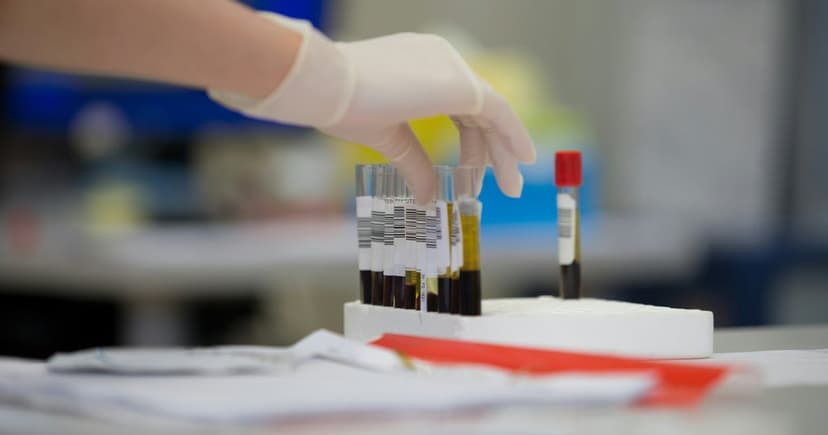
Dementia, encompassing conditions like Alzheimer's disease, affects nearly a million people in the UK, with no current definitive cure or diagnostic test. However, recent research is exploring blood-based biomarkers with optimism. Scientists have focused on the role of tau tangles and amyloid plaques, proteins linked to Alzheimer's development.
A naturally occurring peptide in human blood, HAEE, has emerged as a significant finding. Researchers engineered a version of HAEE to prevent amyloid plaques from aggregating, a process where zinc ions act as a binding agent. Mouse studies demonstrated that manufactured HAEE could reduce plaque buildup.
Surprisingly, testing human blood revealed that HAEE is already present in some individuals. Crucially, Alzheimer's patients exhibited roughly half the HAEE levels of healthy individuals. This observation has led to speculation that low HAEE levels could indicate a potential blood-based biomarker for Alzheimer's diagnosis.
This discovery holds promise for developing future blood tests that could identify dementia years before clinical diagnosis. Experts are investigating if this finding can serve as a reliable indicator of risk. Additionally, HAEE might even be explored as a potential drug for Alzheimer's-modifying therapy, though further research is necessary.


