Home / Health / Surfman's Daughter Uncovers Wave Impact Brain Injury Crisis
Surfman's Daughter Uncovers Wave Impact Brain Injury Crisis
31 Jul
Summary
- Grieving daughter investigates her father's death, suspecting wave impacts.
- Surfmen report widespread cognitive and mood issues linked to their service.
- Coast Guard acknowledges wave-induced brain injuries as an emerging concern.
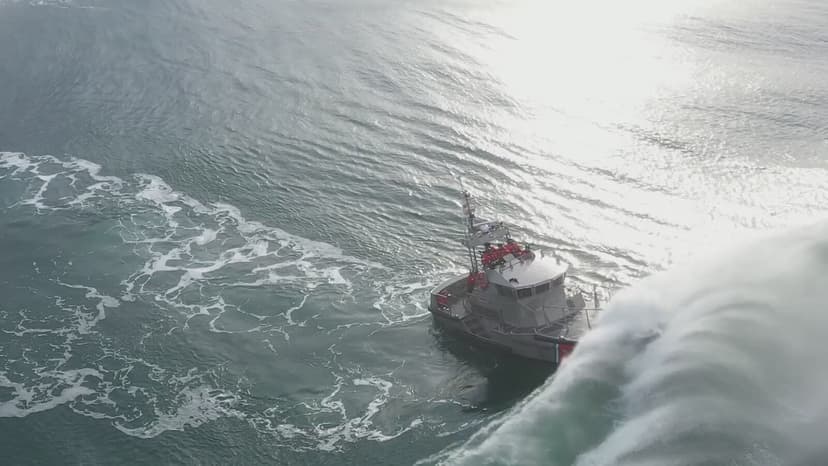
A daughter's investigation into her father's suicide has highlighted a critical concern within the Coast Guard: brain injuries sustained from constant wave impacts.
Brett Bonner, a decorated surfman, died by suicide in February 2025 after years of deteriorating cognitive and mood issues, which his daughter Kayleigh suspected were linked to his dangerous profession.
Kayleigh's survey of 77 surfmen revealed a majority struggle with symptoms like headaches, memory loss, and anxiety, issues the Coast Guard has historically overlooked.
In response to reporting by The New York Times, the Coast Guard has now acknowledged brain injuries from wave impacts as an "emerging concern."
The service has joined a Department of Defense study and launched a brain health initiative to address these issues, which previously lacked formal testing and awareness.
Many surfmen describe the jarring impacts of 40,000-pound lifeboats hitting waves as akin to repeated car accidents, leading to potential long-term brain damage.
For example, Aaron Harris, a retired surfman, experienced panic attacks and insomnia and was later diagnosed with a brain injury by the VA.
Brett Bonner's symptoms worsened significantly after he became an instructor at the National Motor Lifeboat School, where he faced heavy surf daily.
Despite seeking help for PTSD and anxiety, his condition progressed, leading to seizures and increasing aggression before his death.
Civilian neurologists noted abnormalities in his scans, suggesting multiple concussions, yet the Coast Guard did not refer him for specialized brain injury treatment.
Similar issues are reported across the Pacific Coast, with some veterans experiencing severe problems, including hard drug use and homelessness.
The Coast Guard has lagged behind other military branches in studying and addressing these hazards, with its brain injury resources being outdated.
Internationally, studies like NATO's are measuring the severe forces exerted on crews, showing that impacts to the head can be significantly amplified.
Experts warn that repeated jolts of such intensity can cause permanent brain damage, with one Navy fast-boat driver diagnosed with severe CTE.
While the Coast Guard has not directly studied this, experts believe all small-boat crews repeatedly hitting waves are at risk and that the problem is solvable with further research.
Brett Bonner's family now hopes that understanding his condition will help prevent other families from enduring similar tragedies.


