feedzop-word-mark-logo
searchLogin
Feedzop
homeFor YouUnited StatesUnited States
You
bookmarksYour BookmarkshashtagYour Topics
Trending
Terms of UsePrivacy PolicyAboutJobsPartner With Us

© 2026 Advergame Technologies Pvt. Ltd. ("ATPL"). Gamezop ® & Quizzop ® are registered trademarks of ATPL.

Gamezop is a plug-and-play gaming platform that any app or website can integrate to bring casual gaming for its users. Gamezop also operates Quizzop, a quizzing platform, that digital products can add as a trivia section.

Over 5,000 products from more than 70 countries have integrated Gamezop and Quizzop. These include Amazon, Samsung Internet, Snap, Tata Play, AccuWeather, Paytm, Gulf News, and Branch.

Games and trivia increase user engagement significantly within all kinds of apps and websites, besides opening a new stream of advertising revenue. Gamezop and Quizzop take 30 minutes to integrate and can be used for free: both by the products integrating them and end users

Increase ad revenue and engagement on your app / website with games, quizzes, astrology, and cricket content. Visit: business.gamezop.com

Property Code: 5571

Home / Health / Tiny Genetic Flaw Causes 'Baby Alzheimer's'

Tiny Genetic Flaw Causes 'Baby Alzheimer's'

6 Dec, 2025

•

Summary

  • Genetic defect causes brain cells to 'rust' and die.
  • Discovery offers hope for treating childhood and adult dementias.
  • Researchers slowed cellular rusting in lab experiments.
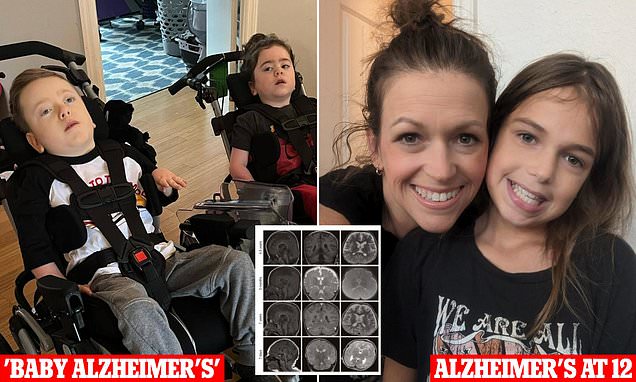
Tiny Genetic Flaw Causes 'Baby Alzheimer's'

Researchers have pinpointed a crucial genetic defect responsible for a form of childhood dementia, often referred to as 'baby Alzheimer's.' This flaw disrupts the GPX4 enzyme, which normally prevents a cell-death process characterized by 'rusting.' When defective, neurons corrode from within and die, a mechanism potentially involved in adult neurodegenerative conditions such as Alzheimer's disease.

The international research team's findings not only illuminate the cause of these rare and devastating childhood disorders but also mark a significant step towards potential treatments. In laboratory settings, scientists have demonstrated the ability to mitigate this cellular 'rusting,' offering a beacon of hope for affected families and the broader field of dementia research.

This breakthrough shifts focus from traditional protein deposit theories to the initial damage of cell membranes. By understanding this fundamental process, scientists are paving the way for novel therapeutic strategies that could impact a wide spectrum of brain diseases, from rare childhood conditions to more common adult dementias.

trending

Salt Lake City funeral shooting

trending

Roblox mandates age verification

trending

Warriors beat Bucks at home

trending

Amazon Prime settlement refunds

trending

Elle Simone Scott dies at 49

trending

Raptors beat Hornets at buzzer

trending

Hawks might trade Trae Young

trending

Gilgeous-Alexander questionable versus Jazz

trending

Magic beat Nets at buzzer

Disclaimer: This story has been auto-aggregated and auto-summarised by a computer program. This story has not been edited or created by the Feedzop team.
A defect in the gene responsible for the GPX4 enzyme causes brain cells to 'rust' and die, leading to childhood dementia.
Yes, scientists found the same cell-death pathway in diseased mice and human Alzheimer's brains, suggesting a shared target for treatment.
Early lab experiments have shown success in slowing cellular rusting, offering the first concrete hope for developing treatments.

Read more news on

Healthside-arrow

You may also like

Monkey Study Offers Hope for Alzheimer's Sound Therapy

13 hours ago • 25 reads

article image

Alzheimer's Blood Tests: Track Changes Over Time

18 Dec, 2025 • 91 reads

article image

Brain Drains Clogged? New MRI Scan Key to Early Alzheimer's Detection

10 Dec, 2025 • 146 reads

article image

Neuroscientist Reveals 3 Ways to Grow Brain Cells

11 Dec, 2025 • 138 reads

article image

Boost Your Brain: Simple Habits for Lasting Health

6 Dec, 2025 • 171 reads

article image