Home / Health / Air Quality: What Does Level 7 Mean for You?
Air Quality: What Does Level 7 Mean for You?
25 Feb
Summary
- Air quality index measures pollution on a scale of 1 to 10.
- Levels 7 and above signify poor air quality, advising reduced outdoor activity.
- Pollutants like PM2.5 and NO₂ can cause systemic inflammation and organ damage.
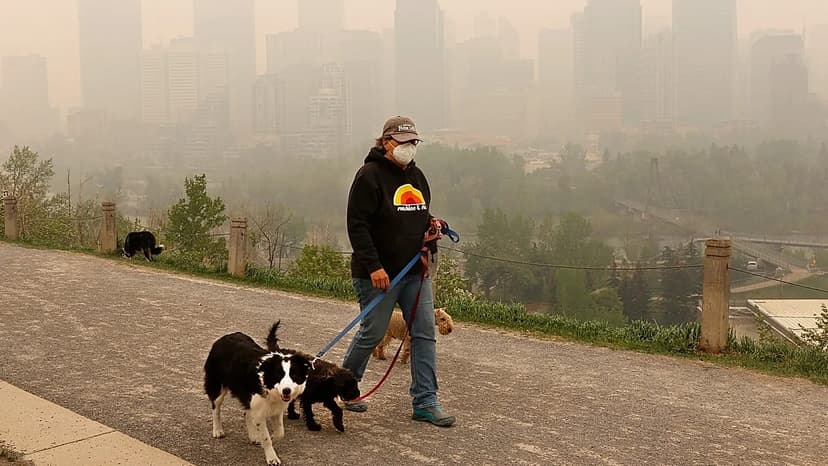
The air quality index (AQI) quantifies daily air pollution levels on a scale from 1 to 10, with higher numbers indicating poorer air quality. In Europe, smartphone applications typically utilize data from national and local monitoring stations to deliver personalized AQI information.
These apps measure concentrations of key pollutants such as fine particles (PM2.5), larger particles (PM10), nitrogen dioxide (NO₂), and sulfur dioxide (SO₂). The World Health Organization (WHO) highlights that breathing these pollutants can lead to systemic inflammation, weakened immunity, and DNA alterations, potentially causing cancer or genetic diseases.
The European Environment Agency (EEA) employs a scale ranging from good to extremely poor air quality. For AQI levels of 7 and above, categorized as poor, it is advisable to limit outdoor activities, particularly strenuous exercise. During periods of prolonged poor air quality, experts recommend using indoor air purifiers. In situations where outdoor exposure is unavoidable, such as during wildfires, the WHO suggests using FFP2 respirator masks.