

Home / Environment / Yamuna's Faecal Coliform Soars Amidst Sewage Inflow
Yamuna's Faecal Coliform Soars Amidst Sewage Inflow
10 Apr
Summary
- Faecal coliform levels in Yamuna river exceeded permissible limits significantly.
- High Biological Oxygen Demand indicates substantial untreated sewage entering the river.
- Water quality testing data for March revealed alarming pollution readings.
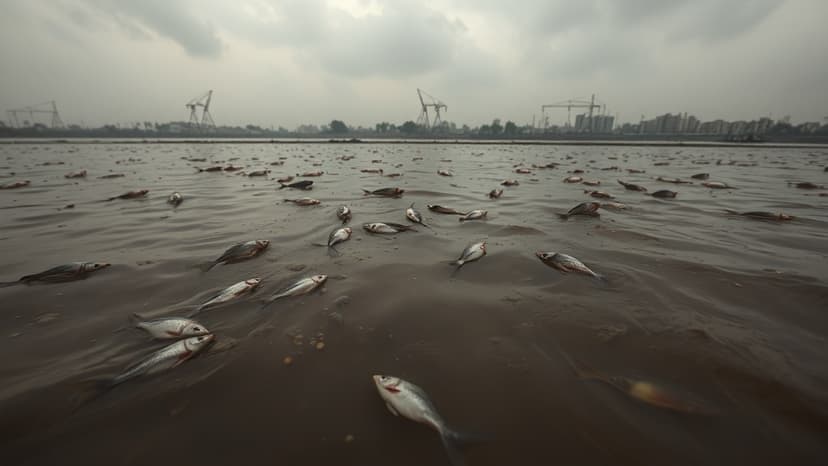
The Yamuna River in Delhi is experiencing a surge in pollution, with the latest data from the Delhi Pollution Control Committee (DPCC) revealing a significant rise in faecal coliform levels for March. This increase, compared to January and February, strongly suggests a substantial amount of untreated sewage is being discharged into the river.
Biological Oxygen Demand (BOD) levels are also alarmingly high, indicating a severe lack of dissolved oxygen necessary for aquatic ecosystems. The DPCC's regular water quality testing at eight key locations along the Yamuna in Delhi, including Palla and Okhla Barrage, measures parameters like BOD, dissolved oxygen, and faecal coliform.
March's report highlighted a critical faecal coliform count of 400,000 Most Probable Number per 100 millilitres at Asgarpur, drastically exceeding the permissible limit of 2,500. While the ISBT Bridge location showed some improvement, other sites experienced sharp increases in pollution. Similarly, BOD levels ranged from 2-60 mg/l, with Asgarpur recording the highest at 60 mg/l, far above the stipulated maximum of 3 mg/l.
Activists have raised concerns over recent delays in uploading data for sewage and effluent treatment plants, emphasizing the critical need for regular monitoring, especially as river flow decreases post-monsoon, exacerbating pollution.
