Home / Environment / Wildlife Overpasses: Bridging Gaps for Gibbons & More
Wildlife Overpasses: Bridging Gaps for Gibbons & More
16 Oct
Summary
- Animal overpasses mimic natural bridges, aiding arboreal species.
- Habitat fragmentation severely impacts gibbon and macaque populations.
- Rope and canopy bridges offer crucial, successful wildlife corridors.
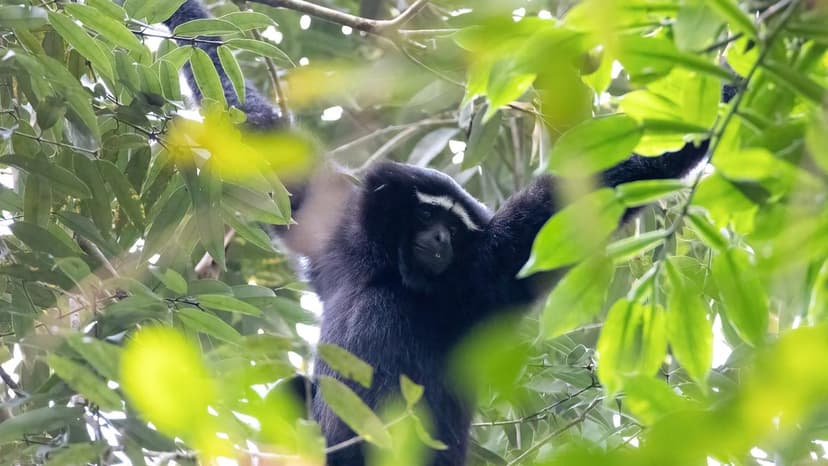
Wildlife corridors are becoming essential for animals facing habitat fragmentation due to expanding infrastructure. A notable example is the Netherlands' kilometer-long animal overpass, designed to safely span highways, rail yards, and golf courses, facilitating wildlife movement across busy human-made obstacles. This concept addresses a critical need highlighted by the plight of species like the Hoolock gibbon in Northeast India.
The Hoolock gibbon, India's only native ape besides humans, has seen its population plummet by 90% due to habitat fragmentation by roads and railways. Their arboreal lifestyle and vulnerability on land make these linear infrastructures particularly perilous. Conservationists have implemented innovative solutions, including planting trees to create natural canopy bridges over railway lines, enabling gibbons to safely traverse these barriers.
Similar challenges affect other species, such as the lion-tailed macaque in Tamil Nadu, whose rainforest habitats are fragmented by estates and roads. Globally, animals like the slow loris in Indonesia and the three-toed sloth in Central America also suffer from habitat division. To aid arboreal creatures, rope bridges have been installed in reserves like Melghat Tiger Reserve and Srivilliputhur Grizzled Squirrel Sanctuary, proving effective for animals like the giant Indian squirrel.


