
Home / Environment / Australia's Venomous Legacy: Millions of Years in the Making
Australia's Venomous Legacy: Millions of Years in the Making
5 Jun
Summary
- Australia has 20 of the world's 25 most venomous land snakes.
- Evolutionary factors include isolation, ancient venomous ancestors, and harsh landscapes.
- Venom potency increased due to an evolutionary arms race for survival.
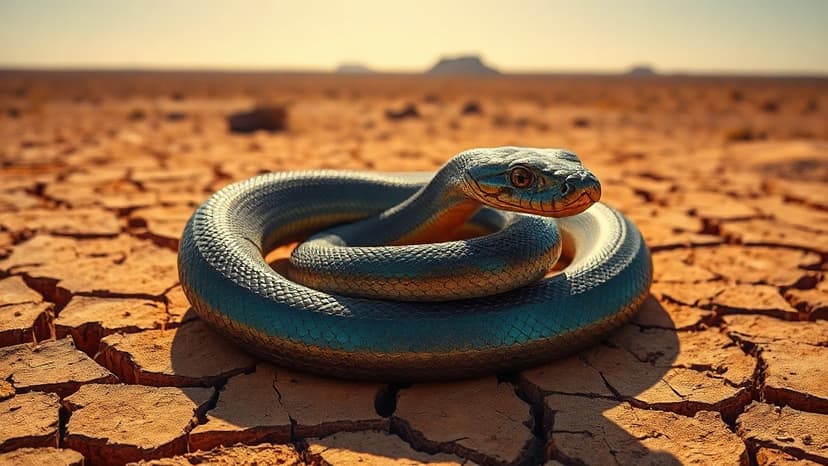
Australia's reputation as a land of dangerous reptiles is rooted in millions of years of unique evolutionary history. The continent hosts a disproportionate number of the world's most venomous snakes, with 20 of the top 25 species found there. This concentration of venomous snakes is not accidental but a result of ancient geological events and biological factors.
Around 100 million years ago, Australia separated from the supercontinent Gondwana, isolating its wildlife. A subsequent mass extinction event millions of years later left the continent a biological blank slate. Around 40 million years ago, the first snakes arrived, belonging to the venomous Elapidae family, which includes cobras and mambas. These ancestors repopulated Australia, leading to nearly all modern land snakes evolving from this single venomous lineage.
The continent's arid and harsh environment played a critical role in the development of potent venom. Scarce food resources meant snakes with highly toxic, fast-acting venom had a significant survival advantage, as prey needed to be subdued quickly before it could be lost to the elements or other predators. This led to an ongoing evolutionary arms race between snakes and their prey, pushing venom potency to extreme levels over millennia.
