Home / Environment / West's 1,200-Year Drought Fueled by Warming
West's 1,200-Year Drought Fueled by Warming
3 Jul
Summary
- Current 22-year dry spell is driest in 1,200 years.
- Climate change accounts for 42% of the drought's severity.
- Drought is projected to continue for many more years.
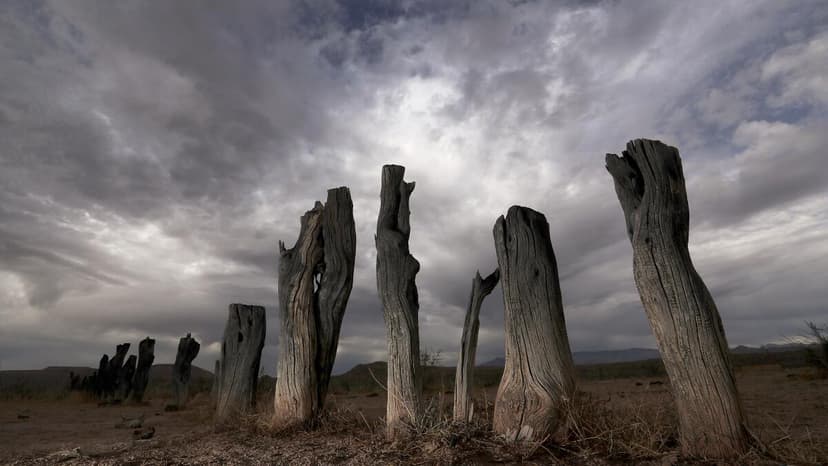
The American West is currently experiencing its driest 22-year period in at least 1,200 years. This extreme megadrought, which began over two decades ago, has been significantly intensified by human-induced global warming. Researchers have determined that 42% of the drought's severity can be attributed to increased temperatures resulting from greenhouse gas emissions.
Scientists used tree ring data to reconstruct soil moisture levels stretching back to the year 800. Their findings reveal that the current dryness surpasses even the severe megadroughts of the past, including one in the late 1500s. Projections suggest that dry conditions are likely to continue, with a substantial probability of persisting for many more years.
The intensified drought has had critical impacts on water supplies, notably reducing the flow of the Colorado River to its lowest two-year average in over a century. Reservoirs like Lake Mead and Lake Powell have reached record low levels. Without climate change, this period would have been unusually dry, but the warming trend has made it exponentially worse.
Experts warn that the region must adapt to a drier future, as natural cycles are now superimposed on a long-term aridification trend. The current reliance on buffers like groundwater and reservoirs is unsustainable, risking their depletion within the next 10 to 20 years as the drought shows no signs of immediate end.


