Home / Environment / West's Water Crisis: Drier Than It's Been in 1200 Years
West's Water Crisis: Drier Than It's Been in 1200 Years
13 Aug
Summary
- Western drought is the driest 22-year period in at least 1,200 years.
- Human-caused warming accounts for 42% of soil moisture deficit.
- Drought impacts agriculture, water supplies, and increases wildfire risk.
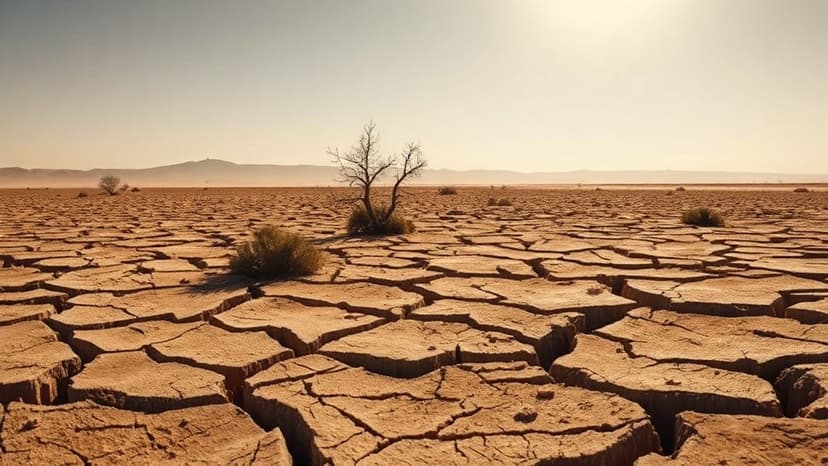
The American West is grappling with a water crisis that has slowly intensified since around 2000, exacerbated by a prolonged drought.
Climate records, reconstructed from tree rings, reveal that the period from 2000 to 2021 became the driest 22-year stretch in at least 1,200 years, surpassing previous historical dry spells.
This natural drought pattern was significantly worsened by rising global temperatures. Research indicates that human-caused warming was responsible for approximately 42% of the soil moisture deficit observed between 2000 and 2021.
The cumulative effects of reduced precipitation and increased evaporation have led to widespread dryness across states like California, Arizona, and Nevada. By February 2026, nearly the entire region experienced some level of drought.
These arid conditions have far-reaching consequences, affecting agriculture, water availability for communities, and ecosystems. Furthermore, the dry vegetation combined with higher temperatures dramatically increases the risk and intensity of wildfires.
Scientists warn that if temperatures continue to rise, future droughts could become more severe, with conditions once considered exceptional potentially becoming more common in the American West's climate.


