Home / Environment / Dams Choke on Silt: West's Water Supply Drains
Dams Choke on Silt: West's Water Supply Drains
5 Aug
Summary
- Reservoir capacity loss outpaces new construction since 1990.
- Water storage per person has dropped 35% since 1970.
- Sediment starvation impacts ecosystems and archaeological sites.
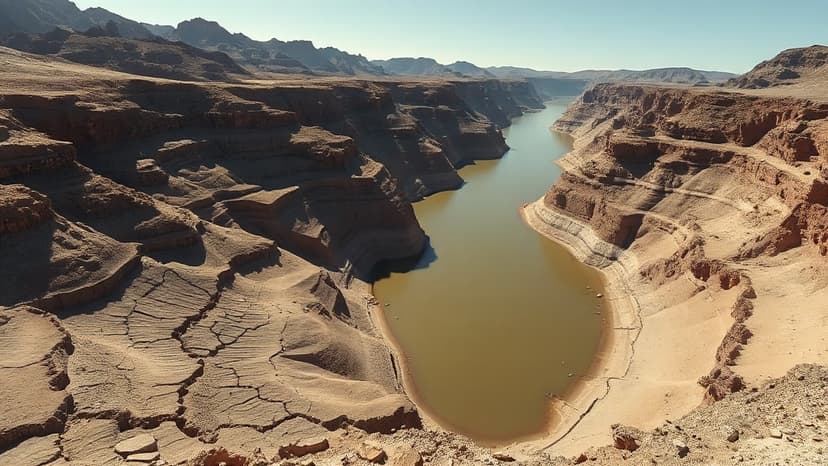
Sediment accumulation in reservoirs across the American West presents a critical challenge for water resource management. Since the early 20th century, thousands of dams built for power, irrigation, and municipal use have trapped river silt. This naturally occurring process is now severely impacting water storage capacity, posing a long-term threat to communities, especially in arid regions.
Since 1990, the loss of water storage capacity due to sedimentation has surpassed gains from new dams. Consequently, water storage available per person in the United States has decreased by 35% since 1970, highlighting the urgent need for infrastructure maintenance over new construction.
This sediment buildup has significant environmental consequences. Downstream ecosystems suffer from a lack of essential sediment, leading to erosion of sandbars and habitat loss for native species. The Colorado River's "sediment starvation" simplifies its channel and reduces wetland formation.
Addressing this crisis involves strategies like water injection dredging and sediment sluicing to manage silt within river systems. Dam removal is also increasingly considered, with projects like the Klamath River removal signaling a shift in management paradigms. Furthermore, increasing wildfires exacerbate the problem, washing massive amounts of sediment into reservoirs.
For instance, Lake Mead has accumulated 2.4 million acre-feet of sediment since the Hoover Dam's completion in 1935. However, the closure of Glen Canyon Dam in 1963 significantly reduced sediment inflow, causing existing sediment to settle into a smaller volume.


