Home / Environment / Volunteers Tackle Water Chestnut Menace
Volunteers Tackle Water Chestnut Menace
28 Jun
Summary
- Volunteers removed invasive water chestnuts from Lake Quinsigamond.
- The plant blocks sunlight, harming native species and biodiversity.
- Seeds can survive for up to 12 years, posing a long-term threat.
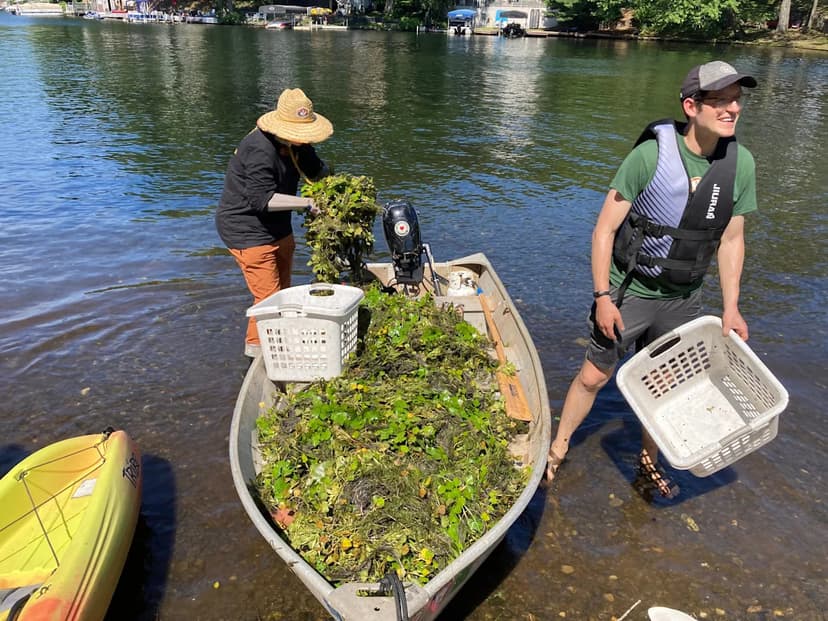
Invasive water chestnuts are a growing concern in Lake Quinsigamond, prompting recent volunteer efforts to control their spread. These plants, originating from Europe, Asia, and Africa, arrived in the U.S. in the mid-1800s and can be introduced through various means, including bird and human contact, or improper disposal of aquarium contents.
Their rapid growth forms thick layers on water surfaces, severely limiting sunlight penetration crucial for native aquatic vegetation. This competition for light and space can decimate biodiversity within the lake. The seeds of the Trapa natans species are particularly resilient, capable of remaining viable for eight to twelve years.
Despite the challenge, eradication is not feasible; instead, constant management is the strategy. Volunteers, guided by experts, physically pull the water chestnuts by their roots. This method helps reduce the plant's coverage area, though the stems may snap. The harvested plants are then composted to prevent further spread.
Similar efforts are underway in other local water bodies, including Coes Reservoir, with scheduled pulls. While Indian Lake and Bell Pond are currently free of water chestnuts, Salisbury Pond faces challenges managed through herbicide treatments, though volunteer removal is discouraged due to safety concerns.


