Home / Environment / Volcano Ash: From Nuisance to Natural Fertilizer
Volcano Ash: From Nuisance to Natural Fertilizer
26 Feb
Summary
- Volcanic ash from Mount Etna is being repurposed as a sustainable agricultural fertilizer.
- A five-year project by the University of Catania highlighted ash's potential beyond agriculture.
- European legislation currently classifies volcanic ash as waste, hindering commercial reuse.
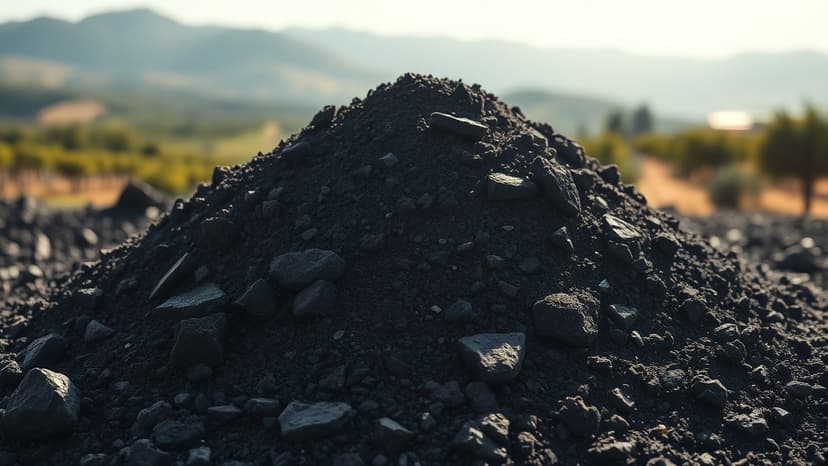
In Sicily, volcanic ash from Mount Etna is undergoing a remarkable transformation, shifting from a persistent nuisance to a valuable agricultural resource. For generations, farmers have battled the daily fallout, but recent years have seen an excessive accumulation, prompting innovative solutions.
A five-year project spearheaded by the University of Catania has unveiled the agricultural potential of this volcanic material. Farmers like Andrea Passanisi are now utilizing the ash as a natural fertilizer, observing a reduction in chemical usage and a more sustainable farming practice. This initiative not only benefits agriculture but also explores the ash's utility in road construction, insulation, and even 3D printing ink.
Despite these promising developments, the path to widespread commercial use faces regulatory hurdles. European environmental legislation categorizes collected volcanic ash as municipal waste, specifically street-cleaning residues, deeming it unsorted and thus ineligible for recovery or recycling. This classification leads to substantial disposal costs for municipalities, estimated at €300 per tonne, a stark contrast to the €30 per tonne for commercial reuse.
While regional guidelines for ash reuse were published in 2024, practical implementation remains slow, with no companies yet registered for collection and refinement. Nevertheless, the prevailing sentiment is shifting towards viewing volcanic ash as an ally, with ongoing efforts to encourage its systemic reuse and foster coexistence with this powerful natural element.