Home / Environment / Spearfishing Viral Star Tackles Invasive Lionfish Threat
Spearfishing Viral Star Tackles Invasive Lionfish Threat
16 Sep
Summary
- Social media star Nate Sorensen combats invasive lionfish using viral videos.
- Lionfish threaten Florida's coral reefs by consuming numerous native species.
- Sorensen's nonprofit, Lionfish Extermination Corp., educates and fundraises.
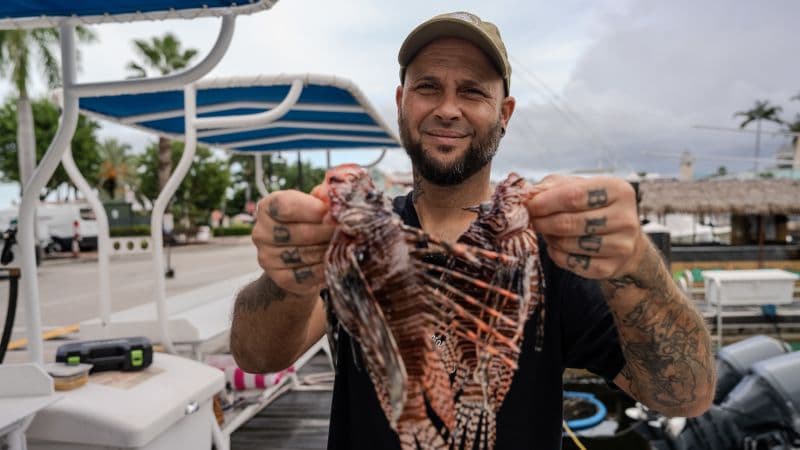
Nate Sorensen has become a prominent figure in combating Florida's invasive lionfish problem, leveraging social media virality for conservation. His nonprofit, the Lionfish Extermination Corp., utilizes engaging videos of spearfishing to raise awareness and funds for controlling the destructive species. These venomous fish, which have no natural predators in the region, pose a significant threat to coral reefs by voraciously consuming over 70 species of native fish and invertebrates.
Sorensen, a vegan who makes an exception for lionfish, started hunting them as a hobby. With the help of his wife, Rachel Taub, and dive partner Alex Borsutzky, he expanded his efforts, forming a nonprofit to solicit donations and sell lionfish to restaurants. His social media content, featuring spearfishing adventures and educational updates, has garnered millions of followers across platforms like Instagram, TikTok, Facebook, and YouTube.
The Florida Fish and Wildlife Conservation Commission (FWC) supports these efforts, noting that harvesting is the most effective measure to reduce lionfish populations. Over one million lionfish have been harvested since 2010. Despite the danger posed by the lionfish's venomous spines, Sorensen continues his work, emphasizing the need for human intervention as predators in the absence of natural ones.
Experts believe lionfish are here to stay due to their resilience and ability to reproduce rapidly, with populations expected to grow and potentially spread further north along the Eastern Seaboard due to rising ocean temperatures. However, studies suggest a significant reduction in lionfish density, rather than complete eradication, is sufficient for native species recovery, offering hope for Florida's delicate marine ecosystems.


