Home / Environment / Vietnam's Plastic Paradox: Health Risks vs. Economic Lifeline
Vietnam's Plastic Paradox: Health Risks vs. Economic Lifeline
16 Dec, 2025
Summary
- Informal recycling villages near Hanoi process 1.8 million tonnes of plastic waste annually.
- Workers face severe health risks from toxic emissions and contaminated waterways.
- Recycling provides essential income despite environmental and health dangers.
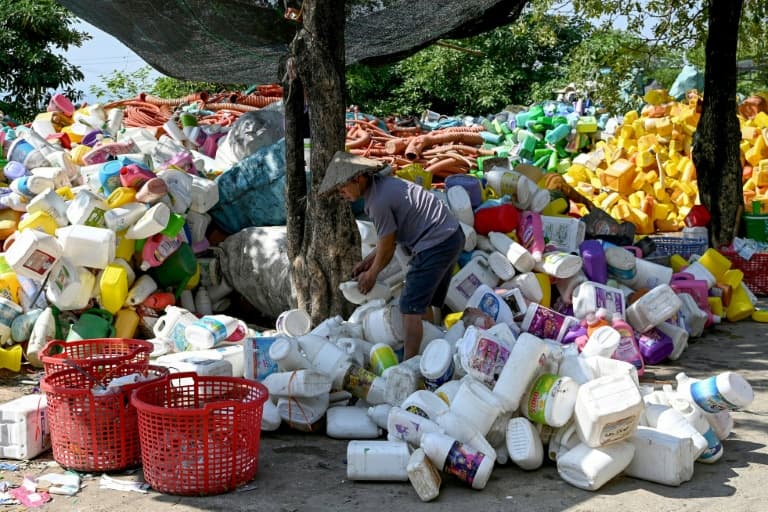
Hundreds of 'craft' recycling villages near Vietnam's capital, Hanoi, are central to managing the nation's 1.8 million tonnes of annual plastic waste. These communities sort, shred, and melt discarded plastics, offering much-needed employment. However, this vital industry operates with few regulations, resulting in severe environmental pollution and posing serious health threats to workers and residents alike.
Experts highlight the dangers, noting zero air pollution control and the direct dumping of untreated wastewater into waterways. Studies have found high levels of lead and dioxins in village sediments, linked to cancer. Life expectancy in these villages is reportedly a decade shorter than the national average, with many workers reporting colleagues or family members suffering from cancer.
Despite the grim health implications, the economic necessity keeps these villages bustling. Many residents have transitioned from farming to more prosperous lives, building brick homes thanks to the recycling business. While Vietnam recycles only a third of its domestic waste, it also imports significant plastic from abroad, a practice that is slowly being tightened.