feedzop-word-mark-logo
searchLogin
Feedzop
homeFor YouUnited StatesUnited States
You
bookmarksYour BookmarkshashtagYour Topics
Trending
Terms of UsePrivacy PolicyAboutJobsPartner With Us

© 2026 Advergame Technologies Pvt. Ltd. ("ATPL"). Gamezop ® & Quizzop ® are registered trademarks of ATPL.

Gamezop is a plug-and-play gaming platform that any app or website can integrate to bring casual gaming for its users. Gamezop also operates Quizzop, a quizzing platform, that digital products can add as a trivia section.

Over 5,000 products from more than 70 countries have integrated Gamezop and Quizzop. These include Amazon, Samsung Internet, Snap, Tata Play, AccuWeather, Paytm, Gulf News, and Branch.

Games and trivia increase user engagement significantly within all kinds of apps and websites, besides opening a new stream of advertising revenue. Gamezop and Quizzop take 30 minutes to integrate and can be used for free: both by the products integrating them and end users

Increase ad revenue and engagement on your app / website with games, quizzes, astrology, and cricket content. Visit: business.gamezop.com

Property Code: 5571

Home / Environment / Arctic Sea Ice Decline Imperils Coastal Communities and Traditional Livelihoods

Arctic Sea Ice Decline Imperils Coastal Communities and Traditional Livelihoods

5 Oct, 2025

•

Summary

  • Arctic sea ice declining by 50% since 1978, exposing coasts to erosion
  • Shorter ice travel seasons disrupt indigenous hunting and access to drinking water
  • Climate models predict Arctic could be ice-free in summer within decades
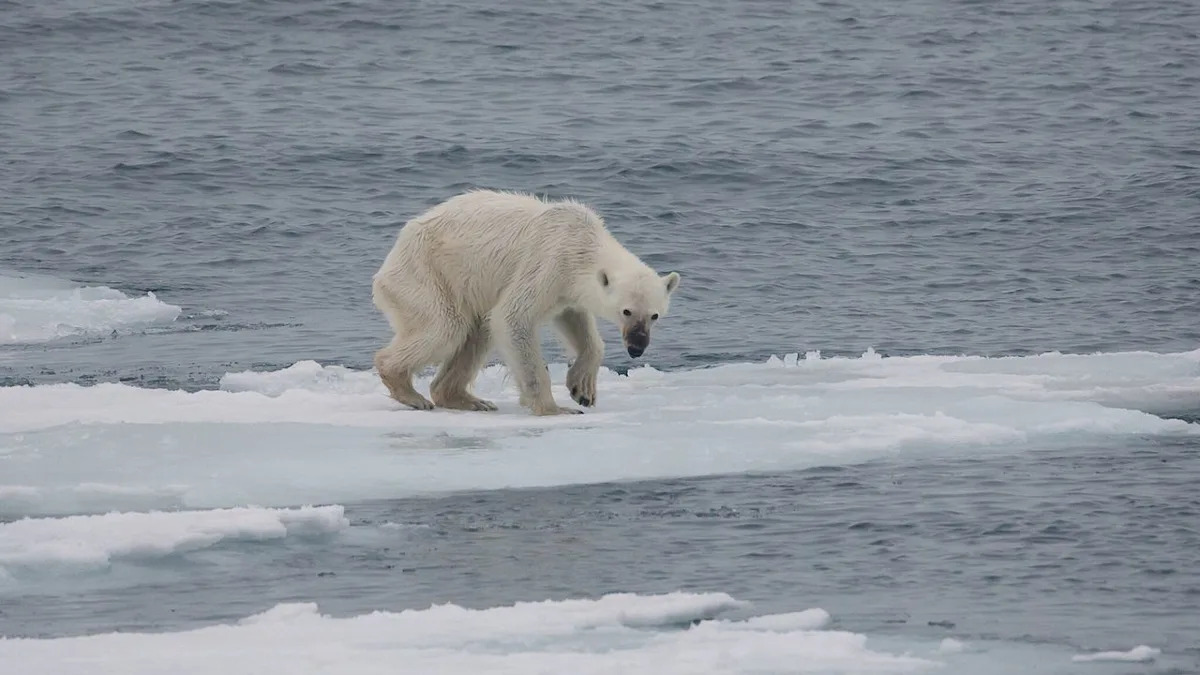
Arctic Sea Ice Decline Imperils Coastal Communities and Traditional Livelihoods

As of October 2025, the Arctic sea ice cover has been steadily declining over the past decades, with far-reaching consequences for the region's coastal communities. Satellite data shows that the late summer sea ice extent has decreased by around 50% since routine observations began in 1978.

This dramatic loss of reflective white sea ice has exposed the darker open water, which absorbs more of the sun's radiation and adds to the overall warming of the Arctic system. Along the Alaskan coast, the decline in sea ice is most apparent in the longer ice-free season, with the ice now forming later in the fall and breaking up earlier in the spring.

trending

Earthquake hits Southern California

trending

Aurora borealis visible tonight

trending

Adewale Ogunleye honorary captain

trending

Russia's Kamchatka snow disaster

trending

Nick Saban docuseries announced

trending

Michigan 100-vehicle pileup closes I-196

trending

NBA All-Star rosters

trending

Madison Keys advances at Australian Open

For the indigenous people who rely on the sea ice for their traditional way of life, this change has been profoundly disruptive. Local hunters can now only safely travel on the ice for shorter periods, and the disappearance of the older, less salty multiyear ice has made it more difficult to access drinking water. Coastal erosion, exacerbated by thawing permafrost and rising sea levels, also threatens roads, houses, and entire communities.

Climate models project that if greenhouse gas emissions continue unabated, the Arctic could be completely ice-free during the summer months within the coming decades. While this may open up new shipping routes, the ecological consequences would be severe, as the loss of sea ice would fundamentally alter the Arctic's delicate marine ecosystems. Even in winter, the extent of sea ice along the Alaskan coast could disappear by the end of the 21st century if global emissions are not reduced.

Disclaimer: This story has been auto-aggregated and auto-summarised by a computer program. This story has not been edited or created by the Feedzop team.
The decline of Arctic sea ice has led to a longer ice-free season, disrupting traditional hunting and access to drinking water for indigenous communities in Alaska. Coastal erosion, exacerbated by thawing permafrost and rising sea levels, also threatens infrastructure like roads and homes.
Climate models show that if greenhouse gas emissions continue unabated, the Arctic could be completely ice-free during the summer months within the coming decades. Even in winter, the extent of sea ice along the Alaskan coast could disappear by the end of the 21st century.
One study found that the average carbon dioxide emissions per person per year in the U.S. led to the disappearance of an area of summer sea ice the size of a large hotel room each year.

Read more news on

Environmentside-arrow

You may also like

Arctic Meltdown: Record Heat, Vanishing Ice

29 Dec, 2025 • 165 reads

article image

Arctic Meltdown Accelerates: Record Heat and Melting Ice

16 Dec, 2025 • 185 reads

article image

White Christmas Melting Away?

12 Dec, 2025 • 226 reads

article image

Doomsday Predictions Become Reality: 15 Alarming Trends Shaking the World

15 Nov, 2025 • 325 reads

article image

Polar Vortex Wobble May Bring Arctic Blast to Northern US Around Thanksgiving

15 Nov, 2025 • 354 reads

article image