Home / Environment / US Antarctic Research Lagging, Scientists Warn
US Antarctic Research Lagging, Scientists Warn
19 Feb
Summary
- US scientists are increasingly reliant on foreign vessels for Antarctic research.
- Funding cuts have led to the decommissioning of US icebreakers.
- Private foundations are now funding critical Antarctic research projects.
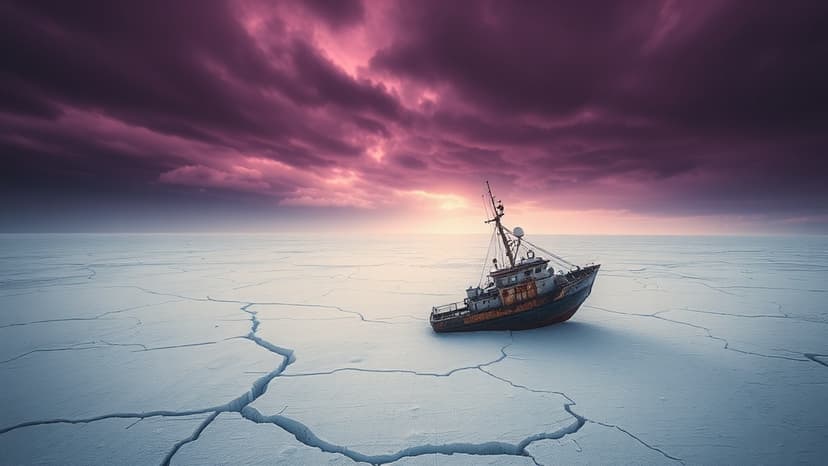
A recent eight-week Antarctic expedition saw nearly a quarter of its scientists be American, yet their research relied heavily on private foundations rather than U.S. government funding. The National Science Foundation (NSF) previously decommissioned the United States' sole icebreaker dedicated to Antarctic study under the Trump administration. This marks a significant shift from past years when the NSF collaborated with Britain to support voyages to the Thwaites Glacier, a crucial ice mass. Researchers are concerned about understanding the glacier's melting processes and forecasting future sea-level rise.
Last year, the NSF reduced funding across various scientific areas, including geosciences. The cancellation of the U.S. icebreaker, the Nathaniel B. Palmer, and the shelving of plans for a replacement have left American researchers without a dedicated Antarctic ship for the first time in 50 years. This situation contrasts with past leadership where the U.S. provided logistics for international scientists. Now, American researchers often seek support from other nations.
The NSF stated its commitment to an influential presence in Antarctica and continues to invest in research stations. However, they are analyzing data from past voyages rather than conducting new measurements. Substitute vessels are being used, but they have limitations, such as reduced sea time and restricted operational areas. Future expedition support plans remain unclear.
Private funding has become essential. For example, a project to install a fiber-optic cable for temperature readings at Thwaites, rejected by the NSF due to being deemed 'too high risk,' was funded by the Gordon and Betty Moore Foundation. Other researchers received grants from NASA and the G. Unger Vetlesen Foundation, or even relied on personal credit cards and donated equipment. A significant $500,000 grant from the Fund for Science and Technology ultimately enabled one ambitious project.
Some scientists believe the NSF has a long-standing weakness of avoiding high-risk, high-reward projects, preferring to fund established research. This, combined with budget constraints and rising costs, limits opportunities for ambitious field programs. Meanwhile, countries like China are expanding their Antarctic research infrastructure, opening new bases and undertaking deep ice drilling projects, highlighting a growing international competition in polar science.