Home / Environment / UK Power Grid on Edge: Balancing Act to Avoid Blackouts
UK Power Grid on Edge: Balancing Act to Avoid Blackouts
18 Jul
Summary
- Neso engineers monitor the grid second-by-second to balance supply and demand.
- Heatwaves last month strained the system, forcing electricity export cuts.
- System inertia is reduced, raising stability concerns among some suppliers.
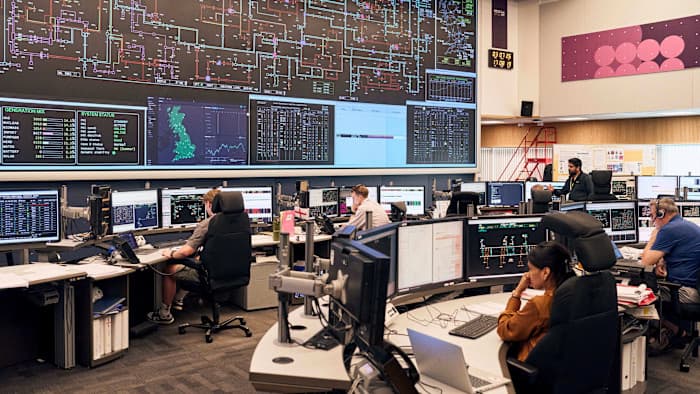
The National Energy System Operator (Neso) in Britain meticulously monitors the national power grid to ensure a constant balance between electricity supply and demand. This critical task, described as more complex than piloting an aircraft, involves real-time adjustments to power station output. During a heatwave last month, the system experienced significant strain, necessitating cuts to electricity exports and emergency calls for additional power generation.
The grid's operational frequency dropped below the required 49.8Hz for nearly two hours on June 23rd, a situation described as unprecedented and on the edge of stability. This complexity arises as Britain transitions to renewable energy sources, phasing out coal and gas power stations. The shift introduces challenges such as the loss of inertia normally provided by large turbines, although Neso is implementing solutions like batteries and synchronous condensers.
Neso has also reduced the minimum inertia requirements to save money and enable operation without gas power, despite concerns from companies like EDF about system stability. Political scrutiny has also emerged, with accusations of operational decisions lacking audit trails. Neso maintains that all decisions follow established procedures and has commissioned a review.


