Home / Environment / Uganda: Nile's Mystical Source & "Mountains of the Moon"
Uganda: Nile's Mystical Source & "Mountains of the Moon"
24 Sep
Summary
- Uganda's Lake Victoria is traditionally identified as the Nile's source.
- The Rwenzori Mountains, known as "Mountains of the Moon," hold Africa's third-highest peak.
- Artistic faces painted on Mabira Forest trees combat illegal logging.
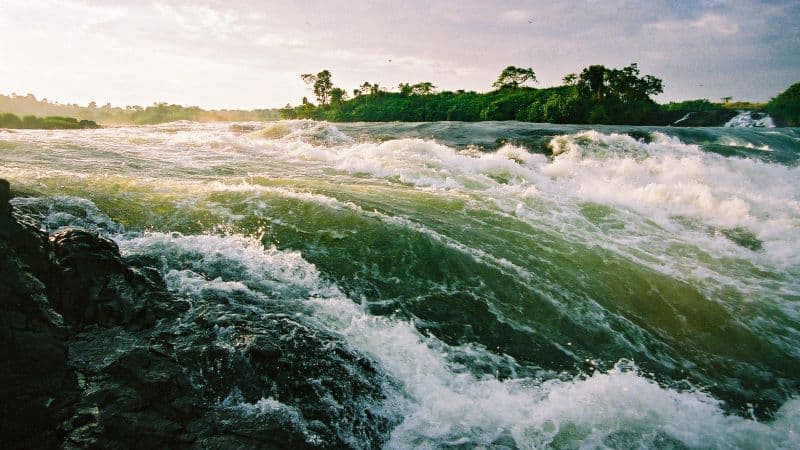
Uganda, a land of diverse natural wonders, has long fascinated travelers with its landscapes stretching from icy mountains to tropical shores. For centuries, speculation surrounded the origin of the Nile River, with ancient accounts referencing twin lakes in the "Mountains of the Moon."
While modern-day Uganda's Ripon Falls on Lake Victoria was identified as the source, the river's complexity extends to tributaries in Rwanda and Burundi. The volume of the White Nile begins in Lake Victoria, beneath peaks reminiscent of ancient descriptions.
The area around Jinja, known as East Africa's adventure capital, is a prime spot for tourism. It offers excursions to witness the Nile's source and provides opportunities for adventure activities like bungee jumping and whitewater rafting.
Beyond Jinja, the article highlights the Rwenzori Mountains, often called the "Mountains of the Moon," which contain Mount Stanley, the third-highest peak in Africa. This region is a national park with unique flora and fauna, though its glacial peaks are shrinking due to climate change.
Mabira Forest, a significant tropical reserve, features an artistic conservation approach where faces are painted on trees to deter illegal logging. Nearby Ssezibwa Falls are a sacred site, deeply intertwined with local mythology about twin rivers and snake spirits.
Other natural attractions include Murchison Falls, where the Nile carves through a narrow gorge, and the Sipi Falls cascading from the extinct volcano Mount Elgon.


