Home / Environment / Arctic Glacier Yields Shocking Tire Dust Discovery
Arctic Glacier Yields Shocking Tire Dust Discovery
14 Feb
Summary
- Tire particles found on remote Greenland glacier.
- Microplastics pose health risks to Arctic species and humans.
- Regulations overlook tire wear, focusing only on tailpipe emissions.
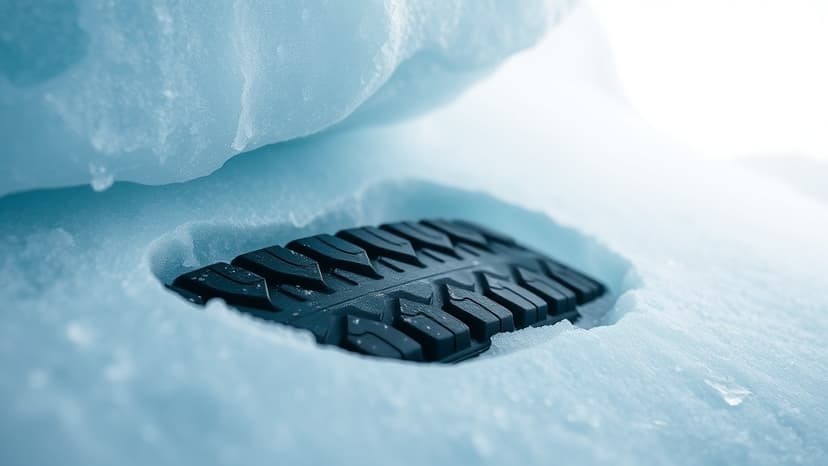
Kristian Louis Jensen, an Inuit scientist, has revealed the extensive spread of microplastics by finding tire particles on a remote Greenland glacier. His research indicates these particles, originating from car tires, travel thousands of kilometers and are deposited in the Arctic, marking it as a sink for global pollution. These microplastics pose significant ecological threats, including toxicity to Arctic species and deformities in fish eggs, jeopardizing Greenland's fishing industry.
Furthermore, the pollution presents a serious health risk to Indigenous communities, settling on their food sources. Jensen criticizes current climate policies for a "critical blind spot," as they regulate tailpipe emissions but neglect tire wear, a leading source of microplastics. He advocates for including 'carbon black,' a tire component, in discussions about transitioning away from fossil fuels.
To address this, Jensen is launching the Black Carbon scientific coalition. This initiative will unite toxicologists, Indigenous leaders, and policymakers to investigate tire particle impacts and present evidence to the EU Parliament and COP31. The coalition's goal is to secure commitments for reducing tire particle emissions.