Home / Environment / Whale Rescue: London's Iconic Thames Event
Whale Rescue: London's Iconic Thames Event
24 Jan
Summary
- A northern bottlenose whale swam up the River Thames in January 2006.
- Thousands gathered to watch the dramatic, day-long rescue attempt.
- The whale ultimately died, but the event united Londoners.

In January 2006, a northern bottlenose whale made an unexpected appearance in London, swimming up the River Thames and past the Houses of Parliament. This rare event, occurring two decades ago, was a pivotal moment for marine rescue teams.
Mark Stevens, a rescuer with British Divers Marine Life Rescue, recalled the profound impact of the incident, noting it led to the realization of post-traumatic stress disorder among the team. The whale's presence generated immense public interest, with thousands gathering along the Thames.
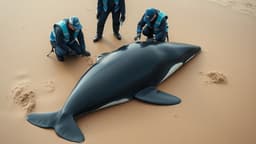
The rescue operation involved intricate planning and execution, including using a press boat to help maneuver the whale. A crane was eventually used to lift the 19-foot mammal onto a barge for transport out to sea. This swift action was crucial to beat the tide and navigate London's bridges.
Despite the team's heartfelt efforts and a 50-50 survival chance, the whale began to convulse as the barge neared Gravesend and sadly died. Post-mortem examinations revealed the whale was severely dehydrated and had not been feeding, explaining its presence in coastal waters.
The event served as a powerful symbol of changing attitudes towards marine conservation in Britain. It demonstrated a shift from a whaling nation to one prioritizing conservation, as noted by Rob Deaville of the UK Cetacean Strandings Investigation Programme. The whale's skeleton is now preserved, contributing to ongoing scientific research and inspiring art.
Stevens reflected that the rescue brought out the best in people, fostering a sense of unity and collective effort. The incident remains a poignant memory, underscoring the profound impact one creature's struggle had on a city and its inhabitants.