Home / Environment / Swiss Glaciers Melt at Alarming Rate
Swiss Glaciers Melt at Alarming Rate
1 Oct
Summary
- Swiss glaciers lost 5.5% of ice volume this year, second-largest drop on record.
- Over the past five years, ice volume in Switzerland has declined nearly a fifth.
- This year's meltwater equals four times Switzerland's annual water consumption.
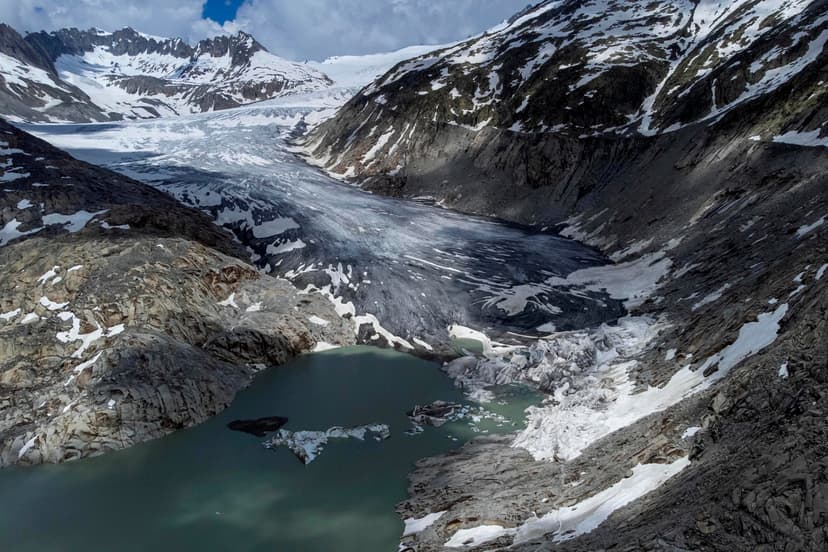
Glaciers in Switzerland, home to the most ice in the Alps, saw a 5.5% loss of ice volume this year. This represents the second-largest percentage drop recorded, attributed to heat waves and insufficient winter snowfall. Experts from the GLAMOS Swiss glacier monitoring service and the Swiss Academy of Sciences stated that Alpine glaciers have little chance of long-term survival under current conditions. The trend has accelerated, with nearly a fifth of Switzerland's ice volume lost in the past five years alone.
The report underscores the devastating impact of global warming on Europe, the continent experiencing the fastest rate of warming. According to Matthias Huss, who heads GLAMOS, the current warming is entirely attributable to human emissions. This year's extensive ice melt follows a record retreat in 2022, exacerbated by summer heat, low winter snow cover, and dust from the Sahara.
Winter snow cover is crucial as it protects ice from melting and contributes to the formation of new glacier ice. The accelerated melting in Switzerland has significant consequences, with the loss of 2.2 trillion liters of water from July to September alone. This amount is four times the annual water consumption of the country's approximately 9.1 million inhabitants. Switzerland, often called the water tower of Europe, supplies major rivers like the Danube, Po, Rhine, and Rhone.
Individual glaciers experienced an average thickness reduction of 2.5 to 4 meters, with some glacier tongues losing up to 10 meters. Glaciers like Allalin, Clarident, Rhone, and Aletsch recorded their biggest melt on record this year. The extensive ice melt has profound implications for water resources and ecosystems across the continent.


