feedzop-word-mark-logo
searchLogin
Feedzop
homeFor YouUnited StatesUnited States
You
bookmarksYour BookmarkshashtagYour Topics
Trending
trending

Earthquake swarm rattles San Ramon

trending

George Kittle ankle injury

trending

Cade Cunningham jersey retired

trending

49ers activate Yetur Gross-Matos

trending

Curry leads Warriors past Magic

trending

Pat Spencer All-Value Team

trending

McConaughey returns to late-night TV

trending

Kraken beat Anaheim Ducks

trending

Riley Leonard replaces Rivers

Terms of UsePrivacy PolicyAboutJobsPartner With Us

© 2025 Advergame Technologies Pvt. Ltd. ("ATPL"). Gamezop ® & Quizzop ® are registered trademarks of ATPL.

Gamezop is a plug-and-play gaming platform that any app or website can integrate to bring casual gaming for its users. Gamezop also operates Quizzop, a quizzing platform, that digital products can add as a trivia section.

Over 5,000 products from more than 70 countries have integrated Gamezop and Quizzop. These include Amazon, Samsung Internet, Snap, Tata Play, AccuWeather, Paytm, Gulf News, and Branch.

Games and trivia increase user engagement significantly within all kinds of apps and websites, besides opening a new stream of advertising revenue. Gamezop and Quizzop take 30 minutes to integrate and can be used for free: both by the products integrating them and end users

Increase ad revenue and engagement on your app / website with games, quizzes, astrology, and cricket content. Visit: business.gamezop.com

Property Code: 5571

Home / Environment / Sun-Blocking Cloud: Climate Fix or Catastrophe?

Sun-Blocking Cloud: Climate Fix or Catastrophe?

24 Nov

•

Summary

  • Scientists propose spraying particles to mimic volcanic cooling.
  • A US-Israeli startup plans to deploy this solar geoengineering technology.
  • Critics warn of potential droughts and hurricanes from sudden cooling.
Sun-Blocking Cloud: Climate Fix or Catastrophe?

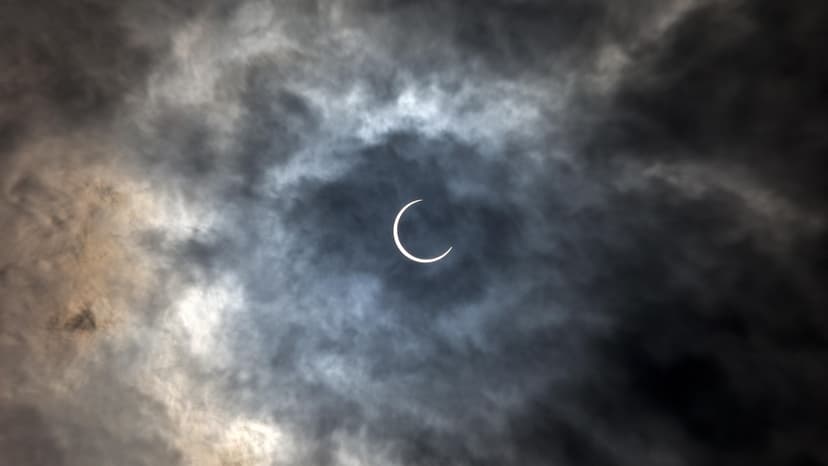
A groundbreaking, albeit controversial, concept is emerging in climate science: solar geoengineering. This approach seeks to mimic the natural cooling effect of massive volcanic eruptions by intentionally injecting sunlight-reflecting particles into the Earth's stratosphere. The theory suggests that dimming the sun's rays could significantly reduce global temperatures, potentially halving future temperature rises.

The idea, first conceptualized by researchers at Harvard University, involves spraying millions of tiny particles into the atmosphere using specialized equipment. This reflective 'cloak' aims to mirror solar radiation back into space, analogous to how the 1991 Mount Pinatubo eruption temporarily cooled the planet. Estimates suggest this could lower global temperatures by 2°C within two years.

Despite its potential, the proposal faces substantial criticism. Many scientists fear that abrupt temperature drops could trigger catastrophic side effects, including widespread droughts, extreme rainfall, and devastating hurricanes in various regions. A US-Israeli startup, Stardust, is reportedly preparing to bring this technology to fruition, while acknowledging the need for careful monitoring and predictive modeling.

Disclaimer: This story has been auto-aggregated and auto-summarised by a computer program. This story has not been edited or created by the Feedzop team.
Harvard scientists proposed stratospheric aerosol injection, using particles to reflect sunlight and cool the Earth, similar to volcanic eruptions.
Stardust aims to spray abundant, inert particles into the atmosphere to act like a mirror, reflecting the sun's rays into space.
Critics warn that sudden cooling from solar geoengineering could cause dangerous droughts, extreme rainfall, and hurricanes.

Read more news on

Environmentside-arrowHarvard Universityside-arrow

You may also like

Space Samples Launch: New Era for Research

19 hours ago • 4 reads

article image

70-Year-Old Photos Reveal UAP Near Nuclear Sites

4 Dec • 97 reads

article image

Space Factories Launch: Varda's W-5 Reaches Orbit

29 Nov • 138 reads

article image

AI Decodes 3.3 Billion-Year-Old Molecular 'Ghosts' to Reveal Earliest Signs of Life

18 Nov • 232 reads

article image

Powerful "Cannibal Storm" Threatens Earth's Tech, Auroras Possible

13 Nov • 181 reads

article image