

Home / Environment / Sea Rise: India's Health Crisis Looms
Sea Rise: India's Health Crisis Looms
15 Apr
Summary
- Sea-level rise declared a public health and equity crisis.
- Hundreds of millions could be displaced by century's end.
- Vulnerable communities disproportionately impacted by floods.
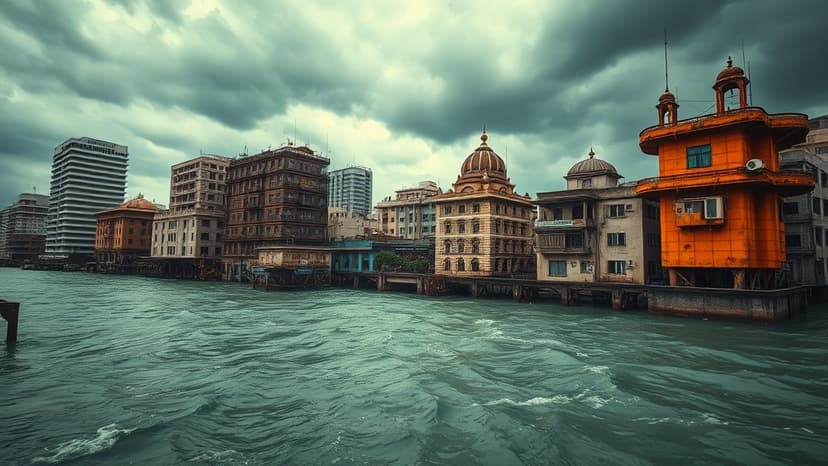
The Lancet Commission on Sea-Level Rise, Health and Justice has declared rising seas a significant public health and equity crisis. This global threat is already impacting human health, food, and water security, with projections indicating hundreds of millions could be displaced by the end of the century. For India, with its vast coastline and populated coastal cities, these findings are critically relevant.
The commission emphasizes that sea-level rise is not a distant threat but an unfolding emergency. It highlights how ocean expansion contributes to displacement, contaminates freshwater sources, and spreads infectious diseases. Vulnerable populations, particularly in low-lying areas, face compounded risks from flooding, leading to waterborne illnesses and threatening long-term water security.
A core finding is the inherent injustice, with communities contributing least to climate change bearing the brunt. This exacerbates inequality, as wealthier areas can afford protective measures while poorer communities face repeated displacement. The commission urges governments to integrate human and planetary health into policy, strengthening adaptation strategies and urban planning.
The warnings underscore the urgency for coastal cities like Mumbai to act on climate resilience. Safeguarding natural buffers like mangroves is crucial for public health. As another monsoon season approaches, the global warning serves as a stark local reminder that climate change is a present-day public health challenge requiring swift, equitable responses to protect populations at the water's edge.
