Home / Environment / Saola Mystery Deepens: Last Sighting 2013, Species Threatened
Saola Mystery Deepens: Last Sighting 2013, Species Threatened
28 Jan
Summary
- Saola, the 'Asian unicorn,' remains undetected since a 2013 camera trap photo.
- Dense, wet forests make detecting this elusive bovid incredibly challenging.
- Hunting and habitat loss are critical threats, pushing the species towards extinction.
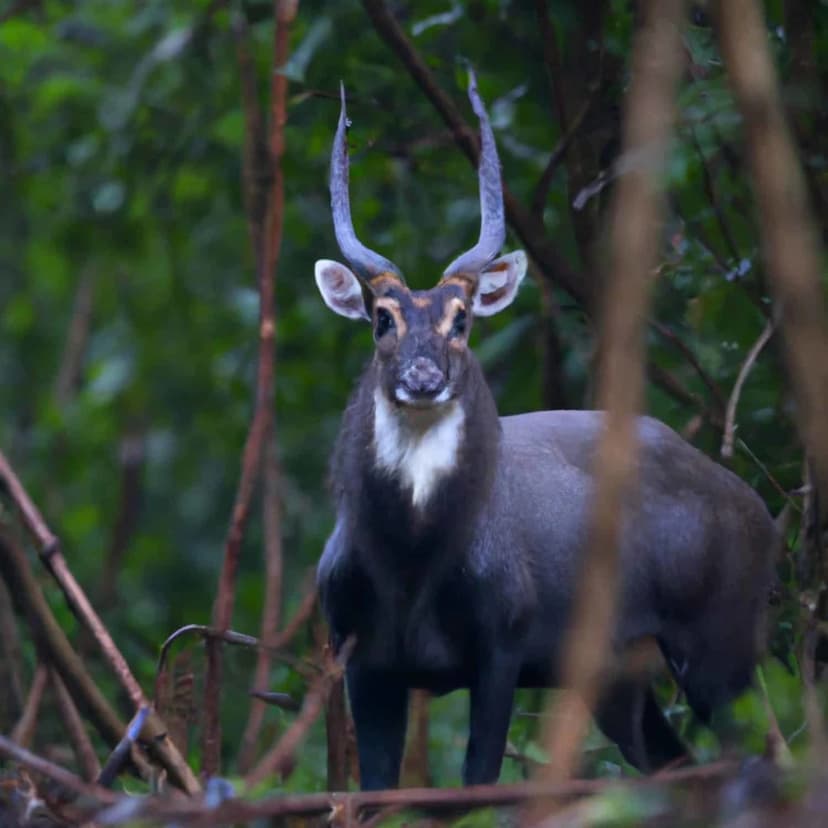
The saola, often called the 'Asian unicorn,' remains one of the world's most mysterious and elusive mammals. Despite being a real species, confirmed sightings are exceptionally rare, with the last widely accepted evidence being a camera-trap photo from 2013. As of January 2026, no further conclusive proof has emerged, underscoring the immense challenge conservationists face in locating and protecting this bovid.
This creature inhabits the dense, steeply graded, and wet forests of the Annamite Mountains along the Vietnam-Laos border. These challenging conditions, coupled with limited road access, make traditional survey methods like camera traps unreliable. Furthermore, only a small percentage of its potential habitat has been intensively searched specifically for the saola, leaving much of its range unexplored and its population status uncertain.
Conservation efforts now rely on innovative techniques. Scientists are analyzing environmental DNA from dung samples, leeches, and other environmental sources to infer the saola's presence. Local knowledge is also crucial, with interviews helping to identify likely areas where the animal might still exist. These methods are vital as the saola faces escalating threats, primarily from widespread snaring, habitat loss due to agriculture and development, and increased human access.
The IUCN Species Survival Commission emphasizes the urgency of detection, noting that finding the saola is the first step toward implementing effective protective measures. Without confirmation of its continued existence, governments cannot enact policies to counter the threats. The window for intervention is potentially short, requiring rapid, coordinated detection and action to prevent the saola from disappearing forever.