Home / Environment / Sambhar Lake Sees Record 2.3 Lakh Migratory Birds
Sambhar Lake Sees Record 2.3 Lakh Migratory Birds
28 Jan
Summary
- Sambhar Lake hosted an unprecedented 2.3 lakh migratory birds from 47 species.
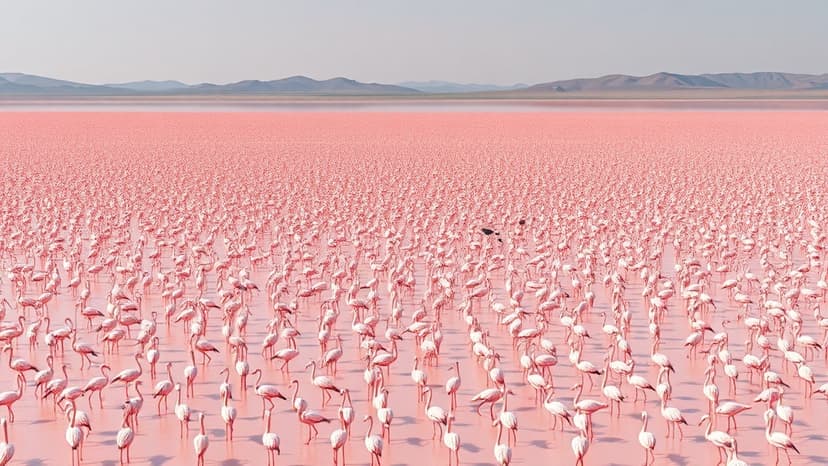
- Flamingos led the count with over 1.8 lakh individuals, turning the lake pink.
- Pollution and excessive tourism pose significant threats to the wetland's avian population.
Sambhar Lake, India's largest inland saltwater wetland, has recorded an unprecedented 2.3 lakh migratory waterbirds from 47 species during the recent Asian Waterbird Census (AWC), 2026. This influx highlights the lake's critical role as a staging area on the Central Asian Flyway. The census, conducted across three zones, identified the main Sambhar Lake and Sitarampura Lake as having the highest species diversity.
Flamingos were the most prominent species, with over 1.8 lakh individuals observed, significantly contributing to the vibrant pink hues across the hypersaline waters. Favorable rainfall this year created ideal conditions for these birds. Other significant species included Northern Shovelers, Avocets, and Common Teals, among many others.
This remarkable tally represents a substantial recovery compared to previous years, with numbers significantly higher than in 2020 and showing a sharp rebound from 2025. However, the census report also raises serious concerns regarding persistent threats to avian populations. Pollution from sewage and industrial waste, coupled with excessive tourism activities such as drone use and vehicle movements, jeopardize the wetland's ecosystem.
Documented threats also include illegal borewells, encroachments, and disturbances from domestic animals. The devastating 2019 botulism outbreak, which caused the death of over 20,000 birds, serves as a stark reminder of Sambhar Lake's vulnerability to these ongoing pressures.