Home / Environment / River Kent Fails Test: Sewage Source Found
River Kent Fails Test: Sewage Source Found
23 Jan
Summary
- Wastewater treatment works identified as major source of river bacteria.
- Human pollution peaked at Staveley treatment works, study suggests.
- Upgrades to Staveley site underway after 2024 survey.
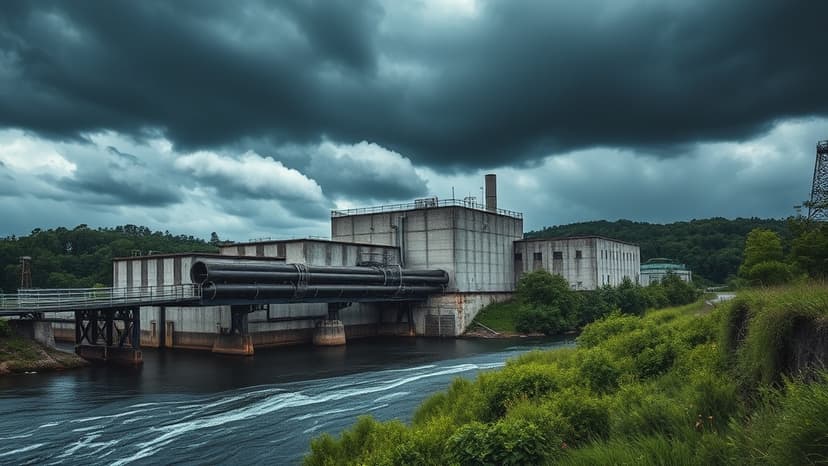
A study conducted in 2024 has identified a wastewater treatment works as a primary source of faecal bacteria contaminating the River Kent near Kendal. Citizen scientists collected samples from May to October 2024, revealing that human pollution levels significantly increased downstream of Staveley's treatment works. These pollution spikes were more pronounced during warmer weather and following substantial rainfall.
University of Sheffield researchers collaborated with local volunteers on the study, which focused on comparing water quality above and below the treatment facility. Data indicated that below the Staveley works, human faecal content in the river water was approximately five times greater than animal content, a stark contrast to the levels found upstream.
United Utilities, the water company responsible for the Staveley site, acknowledged that the facility was operating as designed but has since initiated a multimillion-pound upgrade. This work, aimed at improving river water quality, is projected for completion by summer 2027 and includes sewer relining and increased treatment capacity. The company reported a 30% reduction in storm spills at Staveley following recent February improvements.
While Kendal's treatment works also showed faecal bacteria, levels were reported as considerably lower than those at Staveley. The Environment Agency is currently investigating United Utilities' operation of storm overflows at Staveley. Campaigners emphasize the lack of routine monitoring for microbial content and associated risks in the River Kent, despite its designation as a Site of Special Scientific Interest and Special Area of Conservation.