Home / Environment / Record Seaweed Blob Explodes, Another Vanishes!
Record Seaweed Blob Explodes, Another Vanishes!
4 Dec, 2025
Summary
- A 5,500-mile seaweed blob is growing, reaching 38 million metric tons.
- Saharan dust and African wildfire smoke fertilize the equatorial bloom.
- Warming Gulf waters cause a centuries-old northern seaweed patch to decline.

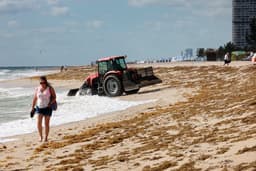
The Atlantic Ocean is experiencing dramatic shifts in seaweed growth, with a massive 5,500-mile sargassum blob reaching record sizes of 38 million metric tons. This "Great Atlantic Sargassum Belt" along the Equator has menaced Caribbean and Florida beaches, causing ecological and economic disruption. Scientists attribute its explosive growth to increased nutrient delivery from Saharan dust storms and African wildfire smoke, acting as a potent fertilizer, alongside runoff from major South American and African rivers.
Concurrently, a historical seaweed patch in the Northern Sargasso Sea is rapidly declining. Rising ocean temperatures and marine heat waves in the Gulf of Mexico are making the waters too warm for the sargassum that has historically thrived there. This shift highlights the significant and often contradictory impacts of climate change on marine ecosystems, creating boom conditions in one area while leading to decline in another.
Experts warn that these climate-driven inundations are likely to persist or worsen. Beach-goers are advised to be cautious when planning vacations to affected areas, with some regions potentially offering safer alternatives. The complex interplay of factors influencing sargassum growth underscores the widespread environmental changes occurring globally.