Home / Environment / Rajasthan Desert Uprising: Khejri Trees Face Axe
Rajasthan Desert Uprising: Khejri Trees Face Axe
7 Feb
Summary
- Mass sit-in in Bikaner against khejri tree felling enters fifth day.
- Protesters allege thousands of trees felled for solar and infrastructure projects.
- Activists demand a specific law to protect the state tree and its ecosystem.
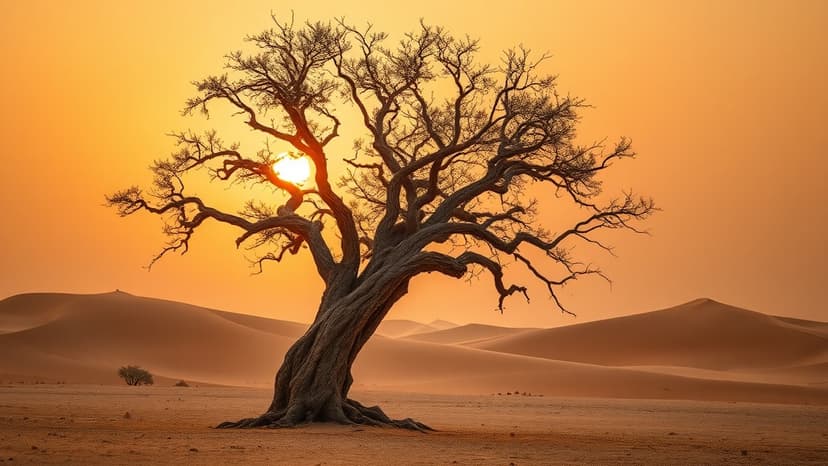
A significant protest, known as a mahapadav, commenced in Bikaner, Rajasthan, and has now entered its fifth day. This mass sit-in is a response to the widespread felling of khejri trees, the state's official tree. The protest has evolved into a regional environmental movement across the western districts of Rajasthan.
Participants, including women, children, farmers, and elders, are actively demonstrating. They are demanding an immediate and complete prohibition on the cutting of khejri trees. Slogans emphasizing the desert's survival and the future of generations are resonating at the protest site.
Activists have extended a call for statewide solidarity, urging people to either travel to Bikaner or initiate similar sit-ins in their own districts. This coordinated action aims to intensify pressure on the state government. The issue is reported to affect the entire desert belt, encompassing Jaisalmer, Barmer, Jodhpur, Pali, Jalore, Phalodi, Sriganganagar, and Churu.
Concerns have been raised that thousands of khejri trees have been felled in recent years. This destruction is largely attributed to the development of infrastructure and solar power projects. There are also allegations of an illegal wood mafia operating with little oversight.
Parasram Bishnoi, founder of the Khejri Bachao Andolan, stated that the protest will persist until a specific law is enacted that punishes the felling of khejri trees. He expressed that large areas of desert land are being allocated for solar parks, leading to ecosystem destruction and jeopardizing the desert's survival without legal protection.
Former Congress minister Bhanwar Singh Bhati underscored the khejri tree's ecological and social significance, referring to it as the desert's lifeline. The tree is crucial for soil conservation, groundwater retention, livestock support, biodiversity, and sustaining rural livelihoods. Independent MLA Ravindra Bhati alleged that solar companies have buried felled khejri trees to conceal the extent of the destruction, a practice he has been highlighting for over a year.
Local residents have observed that the loss of khejri trees is already impacting fodder availability, groundwater levels, and traditional ways of life, particularly for pastoral and farming communities.