Home / Environment / Punjab's Aquifers Drying: Crisis Looms
Punjab's Aquifers Drying: Crisis Looms
16 Feb
Summary
- Groundwater withdrawals exceed recharge, lowering water tables across Punjab.
- Some districts see over 1.5ft annual drop in water levels.
- Farmers' increasing reliance on tube wells fuels the crisis.
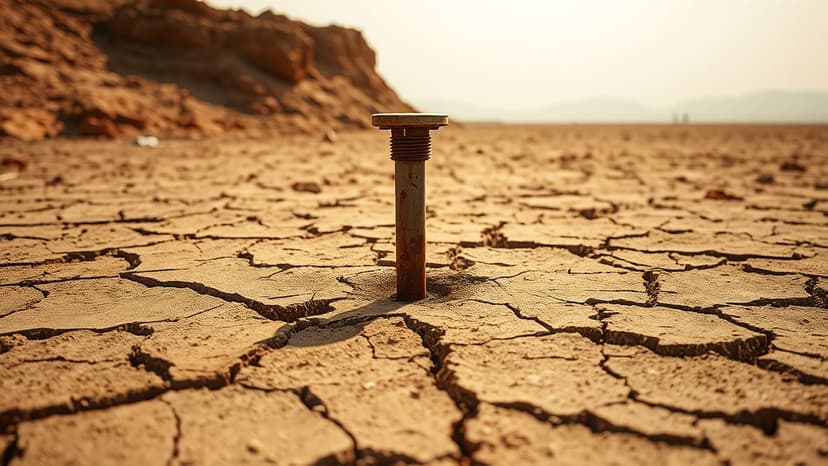
Punjab's agricultural sector is experiencing alarming groundwater depletion, with annual withdrawals now exceeding the aquifers' natural recharge rate. This imbalance is causing water tables to steadily decline across the province.
Data from the Punjab Irrigation Department indicates significant drops in water levels in nearly all districts, with Pakpattan, Okara, and Sahiwal facing annual declines of over 1.5 feet. The strain is also evident volumetrically, with districts like Okara extracting groundwater equivalent to more than half of Mangla Dam's capacity.
This over-reliance on groundwater is driven by factors including increased cultivation of water-intensive rice, shrinking landholdings, and rising input costs for farmers. Consequently, the area irrigated solely by tube wells has nearly doubled since 2010, pushing the total number of tube wells in Punjab to over 1.3 million.
The current situation risks a severe water crisis similar to that experienced by Tehran, Iran. To avert this, strategic interventions are urgently needed to enhance aquifer recharge, rather than relying solely on regulatory measures that could burden farmers.
Repurposing abandoned canals and developing farm-level recharge wells are promising solutions. Utilizing excess surface water during floods to replenish stressed aquifers could offer a sustainable path forward. However, this requires political will and a shift in mindset towards proactive water management.