Home / Environment / Stone Walls Rise to Protect Madayipara's Fragile Ecosystem
Stone Walls Rise to Protect Madayipara's Fragile Ecosystem
13 Sep
Summary
- Construction of a stone boundary wall aims to curb vehicle entry onto Madayipara.
- Madayipara is a unique laterite plateau with exceptional biodiversity.
- An eco-park's operation without permits has sparked environmental concerns.
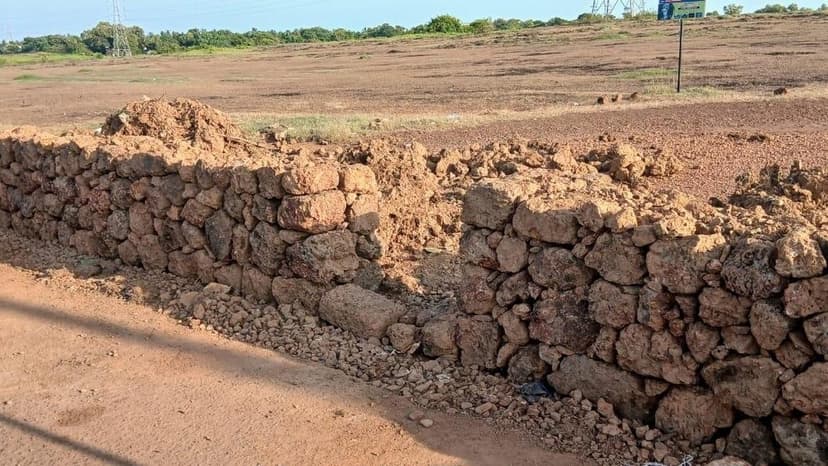
The Madayi Thiruvarkattukavu Devaswom has initiated the construction of a stone boundary wall along the road leading to Madayipara. This measure is designed to prevent vehicles from entering the ecologically preserved laterite plateau, a move driven by concerns over vehicular damage to rare plants and the area's biodiversity. The construction is underway on the stretch leading to the Vadukunda Siva Temple, with authorities prioritizing immediate vehicle restriction over budgetary allocation.
This intervention occurs amidst growing protests from environmental groups and the Madayipara Samrakshana Samithi regarding escalating tourist numbers and the operation of an amusement-cum-eco park. Environmentalists allege that unregulated tourism, artificial lighting, and waste generation are severely damaging Madayipara's fragile ecosystem and disturbing its wildlife. The Samithi has further claimed the eco-park, opened recently, is operating without essential permits, including a trade licence.
Madayipara, a 3.65 square-kilometre laterite plateau, is renowned for its exceptional biodiversity, supporting 670 flowering plant species, including rare insectivorous and threatened varieties. It is also a haven for 258 bird species, many globally threatened, and home to numerous mammals, reptiles, amphibians, butterflies, and dragonflies. Earlier directives from the Kerala High Court also emphasized protecting the hills from human entry, a restriction that had lapsed, leading to increased interference.
Conservationists argue that the issue extends beyond vehicle movement, demanding stricter regulations on growing tourist activities, particularly those linked to the controversial eco-park. While the Devaswom asserts the wall aims to protect the landscape from vehicular intrusion, some residents criticize the closure of traditional access routes. The Devaswom maintains its primary objective is conservation, not preventing legitimate public access to this vital ecological site.


